What Is a Millstone in the Bible?
Quick Summary
In the Bible, a millstone is a heavy stone used to grind grain, but it also becomes a powerful symbol of daily provision, economic survival, moral responsibility, and severe warning. Scripture uses the millstone to speak about ordinary life, exploitation of the poor, and the grave consequences of harming the vulnerable. When Jesus refers to a millstone in the Gospels, he draws on this familiar object to issue one of his strongest ethical warnings.
Introduction
Few biblical objects are as ordinary and as unsettling as the millstone. It belonged to the rhythms of everyday life. Grain was ground daily, often by hand, to provide bread for a household. Without a millstone, a family could not eat. It was essential, heavy, and ever-present in village life.
Because of this, the millstone becomes more than a tool in Scripture. It becomes a symbol of livelihood, vulnerability, and moral accountability. To take away a millstone was to threaten survival. To misuse its weight was to enact violence. When biblical writers speak of millstones, they are often speaking about power, responsibility, and the consequences of injustice.
Understanding the millstone helps clarify some of the Bible’s strongest language about oppression and harm. What sounds hyperbolic to modern ears would have landed with sobering realism in the ancient world.
What Is a Millstone Literally?
A millstone was a circular stone used to grind grain into flour. In ancient Israel, most homes used a hand mill made of two stones. The lower stone remained stationary while the upper stone rotated, crushing grain placed between them. This daily task was often performed by women and children, making it part of the household’s most basic labor.
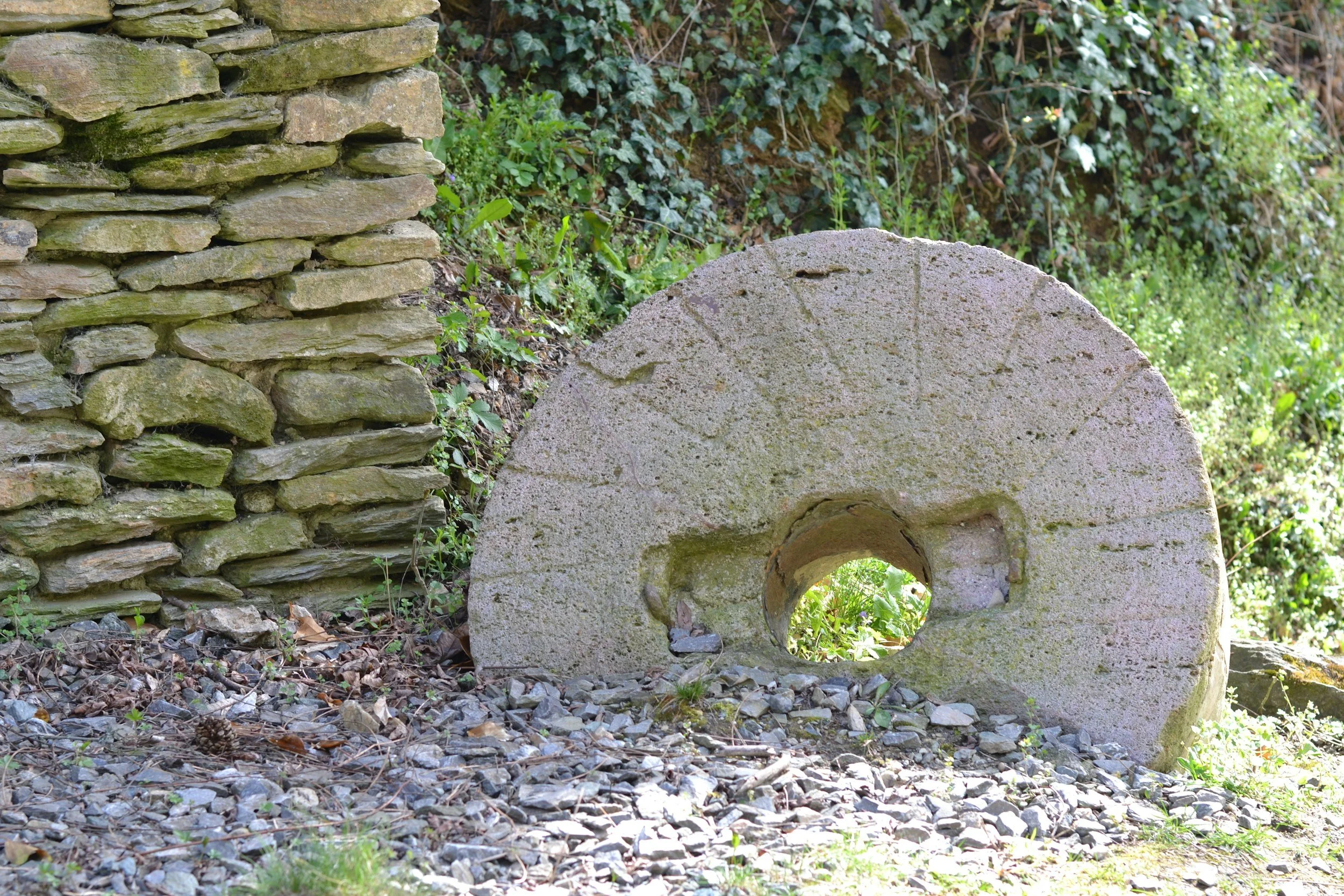
A large millstone sits unused.
Larger millstones existed as well, especially in commercial or communal settings. These stones were so heavy that they required animals to turn them. Archaeological finds across Israel and the broader Mediterranean world confirm the central role of milling in ancient economies.
The weight of a millstone matters for its symbolism. It was not easily moved. It could not be lifted casually. Its heaviness becomes crucial when Scripture uses the millstone as an image of judgment or irreversible consequence.
Millstones and Daily Survival
In the Bible, a millstone represents more than labor. It represents life itself. Deuteronomy 24:6 forbids taking a millstone as collateral for a loan, stating that doing so would be taking a person’s livelihood. This law protects the poor from exploitation by recognizing how essential the millstone was for survival.
This command reveals a core biblical concern. Economic practices are never morally neutral. To deprive someone of the means to feed themselves is treated as a form of violence. The millstone becomes a symbol of the thin line between subsistence and starvation.
By placing legal protection around millstones, the law affirms that God’s justice includes safeguarding ordinary means of life. Faithfulness is measured not only in worship but in how economic power is exercised.
Millstones as Symbols of Oppression
Because millstones were essential for survival, controlling them meant controlling people. Scripture reflects an awareness of how easily tools of daily life could become instruments of domination.
The prophets frequently condemn practices that exploit the poor, and while millstones are not always named directly, the logic is the same. Removing access to food production, wages, or land was a common way elites maintained control. The millstone stands in for all such mechanisms.
This background gives force to biblical warnings about injustice. God’s concern is not abstract morality but concrete harm done to bodies and households. The millstone reminds readers that oppression often hides in ordinary systems.
The Millstone in Wisdom and Poetry
While less frequent in wisdom literature, the millstone’s imagery aligns with broader biblical themes about weight, consequence, and permanence. Grinding is slow and thorough. Once grain is crushed, it cannot return to its original form.
This irreversible process parallels biblical reflections on actions and outcomes. Choices shape lives in lasting ways. Harm done cannot simply be undone with regret. The millstone quietly reinforces this moral realism.
Jesus and the Millstone
The most striking use of the millstone appears in the teaching of Jesus. In Matthew 18:6, Mark 9:42, and Luke 17:2, Jesus warns that causing one of the vulnerable to stumble carries devastating consequences. He declares that it would be better to have a millstone hung around one’s neck and be thrown into the sea than to cause such harm.
This is not casual exaggeration. Jesus is drawing on a concrete image of death by drowning with an object so heavy that escape would be impossible. The warning is meant to be shocking, not symbolic alone.
Importantly, Jesus applies this image to harm done to “little ones,” a phrase that includes children, new disciples, and those with little social power. The warning is not about personal offense but about abuse of influence and authority.
By invoking the millstone, Jesus aligns himself with the prophetic tradition that treats harm to the vulnerable as a serious moral crisis. His teaching insists that responsibility increases with power.
Why the Warning Is So Severe
The severity of Jesus’ language reflects the stakes involved. Vulnerable people depend on others for protection, guidance, and care. When those entrusted with influence instead cause harm, the damage is profound and lasting.
The millstone image communicates finality. Some harm cannot be undone. Jesus’ words function as a boundary marker, drawing a clear line around the dignity and safety of the vulnerable.
This teaching resists attempts to spiritualize ethics while ignoring real-world consequences. Faithfulness is not measured by correct belief alone but by how one’s actions affect those with less power.
The Millstone and Moral Accountability
Across Scripture, the millstone gathers layers of meaning. It is an object of daily provision, a protected necessity, and a symbol of grave responsibility. Together, these uses point to a consistent biblical ethic.
Those who control resources, teaching, or influence are accountable for how that power is used. The Bible does not allow harm to be excused by status, intention, or tradition. The millstone stands as a reminder that weighty consequences follow weighty actions.
This emphasis carries forward into early Christian communities, where care for the weak becomes a defining mark of faithfulness.
What the Millstone Reveals About God
The biblical use of the millstone reveals a God deeply concerned with ordinary life and vulnerable people. God notices who has access to food, safety, and dignity. Divine judgment is not arbitrary but tied to real harm done in real contexts.
At the same time, the millstone underscores God’s insistence that power be exercised with care. Authority exists for service, not domination. When authority is abused, Scripture does not soften its critique.
The millstone therefore becomes a moral lens. It asks who bears the weight of a system and who benefits from it. It presses readers to examine their own participation in structures that either sustain life or threaten it.
FAQ
What is a millstone in the Bible?
A millstone is a heavy stone used to grind grain. In Scripture, it also becomes a symbol of livelihood, oppression, moral responsibility, and severe consequence.
Why does Jesus mention a millstone?
Jesus uses the millstone to issue a strong warning against harming vulnerable people. The image conveys irreversible consequence and moral seriousness.
Is the millstone always a negative symbol?
No. It represents daily provision and survival. It becomes negative when its weight is used to harm or exploit others.
What does the millstone teach about justice?
It highlights God’s concern for the vulnerable and insists that those with power are accountable for how their actions affect others.
Works Consulted
The New Revised Standard Version of the Bible.
Walter Brueggemann, The Prophetic Imagination.
Kenneth E. Bailey, Jesus Through Middle Eastern Eyes.
Craig Keener, The Gospel of Matthew: A Socio-Rhetorical Commentary.
