Ephesus in the Time of Paul
Introduction
If you could walk into Ephesus during Paul’s ministry, you would find a lively city filled with noise, color, and movement. Ships pulled into its harbor daily. Traders filled the streets. Philosophers argued in public squares. Families from across the Mediterranean made their homes here. It was a crossroads of the ancient world, a place where many voices promised meaning and belonging.
Paul steps into this world with a message that unsettled some and encouraged many. His preaching did not simply add another option to the city’s spiritual marketplace. It announced a new way of living. To understand Ephesians, it helps to picture the streets Paul walked, the crowds he spoke to, and the setting that shaped both the church’s growth and its challenges.
Ephesus in the Time of Paul: Culture, Religion, and Daily Life
A City at the Center of Influence
Ephesus was one of the most important cities in the Roman Empire. Its position on major trade routes made it wealthy, diverse, and always in motion. Goods traveled through its harbor. Ideas traveled through its streets. People from across the empire gathered there to work, pray, argue, and learn.
Paul’s audience lived in this swirl of influences. Their faith took root in a place where identity was constantly negotiated. His call to unity would have sounded both hopeful and demanding. This is reflected in your post on Unity in Christ, where Paul draws together believers from different backgrounds and histories.
The Temple of Artemis
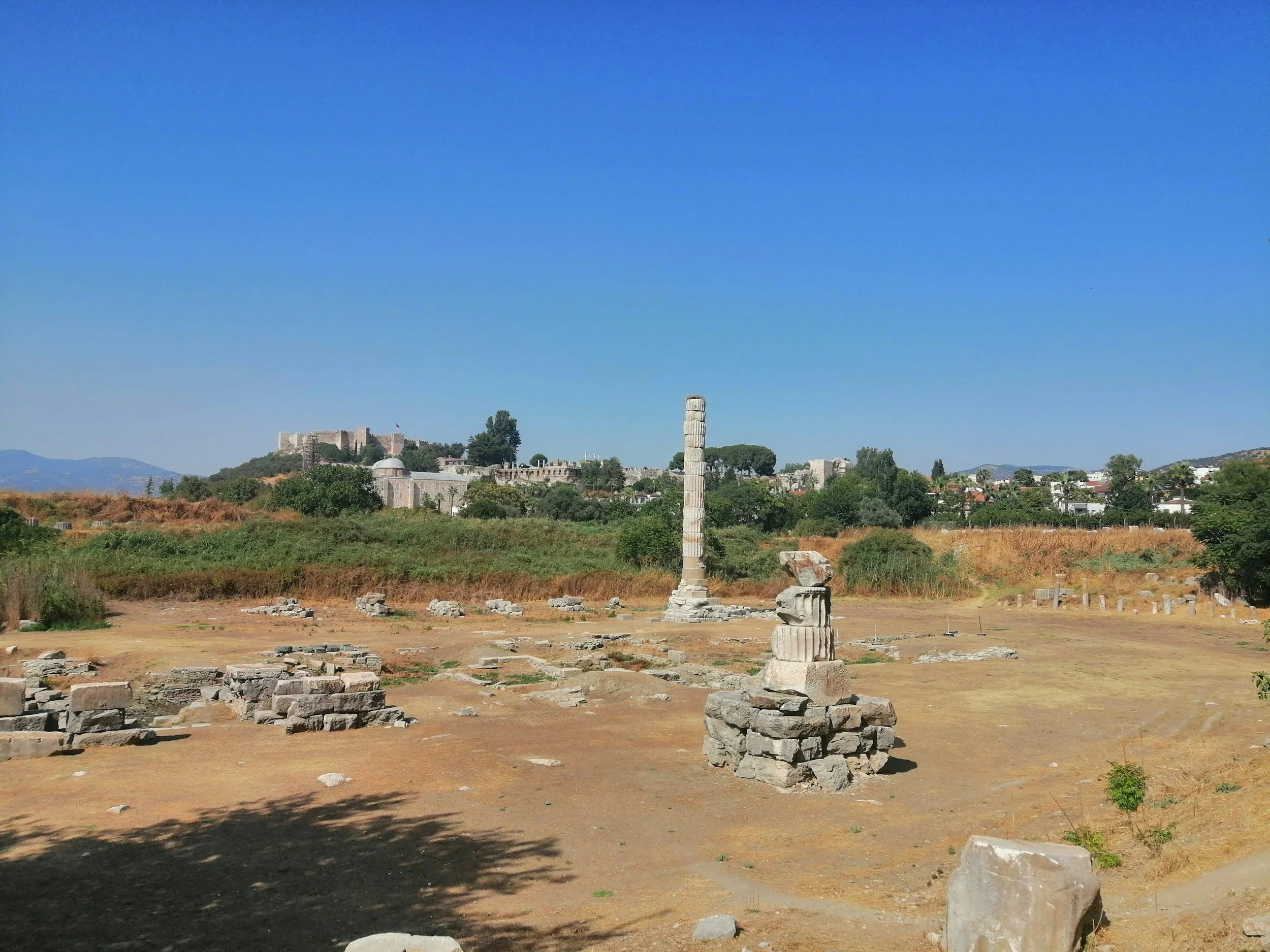
The Temple of Artemis (aka Temple of Diana) was a Grek temple located in Ephesus, which is near modern-day Selcuk, Turkey.
Standing above the city was the Temple of Artemis, one of the Seven Wonders of the Ancient World. Pilgrims came from far away to worship, trade, and seek blessing. The temple was not only a religious center. It was a hub of commerce, finance, and social life.
Paul’s preaching challenged this system. In Acts 19, a silversmith named Demetrius feared that Paul’s message would undermine the temple economy. That fear shows how deeply spirituality and daily life were intertwined here. The church learned quickly that following Christ required courage.
You can explore more about this theme through your post, Christ Is Our Peace, where Christ breaks barriers formed by culture and expectation.
A Home for Learning and Inquiry
Ephesus was known for its learning. Philosophers, teachers, and spiritual leaders gathered in public spaces to shape discussions. The library, built later but reflecting the city’s intellectual climate, became a symbol of this legacy. Even in Paul’s time, Ephesians were curious, educated, and open to new ideas.
This made the city fertile ground for the gospel, yet also a place where new believers needed grounding. Paul encourages them to walk in love, light, and wisdom, as found in your reflections such as Walking in Wisdom.
A Diverse and Growing Church
The church in Ephesus included Jews and Gentiles, citizens and travelers, wealthy patrons and laborers. Its diversity was its strength and its challenge. Paul writes about unity because unity takes work. He writes about grace because grace forms the foundation of their shared life. The city’s bustle and complexity shaped the questions they carried.
This background brings depth to your posts like Blessings in Christ and Maturity in Christ. Paul speaks into a landscape that needed steady voices.
Ephesus Through Historical and Archaeological Windows
Ephesus today remains one of the best-preserved ancient sites in the world. Its ruins help us imagine the world of Paul.
Recommended Historical and Archaeological Resources
These resources offer maps, excavations, histories, and photographs that deepen our understanding of the city, helping us imagine the world that shaped the letter to the Ephesians.
Frequently Asked Questions
What made Ephesus so important in Paul’s time? Its location on trade routes brought wealth, influence, and cultural diversity, making it a strategic hub for Paul’s ministry.
Why was Paul’s preaching seen as a threat in Ephesus? It challenged economic and religious structures tied directly to the Temple of Artemis.
Was the Ephesian church large? It grew steadily and became one of the most influential churches in the region.
How do archaeology and history contribute to understanding Ephesians? They provide tangible context for the questions, pressures, and opportunities facing early believers.
Part of Bible Reference / Book Studies
Explore the Letter to the Ephesians
View the main overview or explore chapter-by-chapter summaries.
