6 Surprising Facts About the Temple of Artemis in Ephesus
Quick Summary
The Temple of Artemis in Ephesus was one of the most magnificent structures of the ancient world. More than a religious center, it was a cultural, economic, and spiritual force that shaped the identity of Ephesus for centuries. Understanding its influence helps illuminate the background of Acts 19 and the world behind Ephesians, where questions of spiritual power, allegiance, and devotion were part of daily life.
Introduction
The Temple of Artemis was more than a beautiful building. It shaped the economy, identity, and spiritual imagination of Ephesus for centuries. When Paul preached Christ in this city, he spoke into a world shaped by devotion to Artemis, fears of spiritual forces, and pride in one of the ancient world’s most celebrated wonders.
These facts reveal why the temple mattered so deeply, and how its influence forms the backdrop of Acts 19 and many themes woven through Ephesians.
This image shows the reconstructed column of the Temple of Artemis in Selçuk, Turkey—the modern site of ancient Ephesus. Though only a portion of the original wonder remains, the setting provides a visual reminder of the temple’s immense scale and the cultural and spiritual world of the ancient city. Source
1. A Wonder of the Ancient World
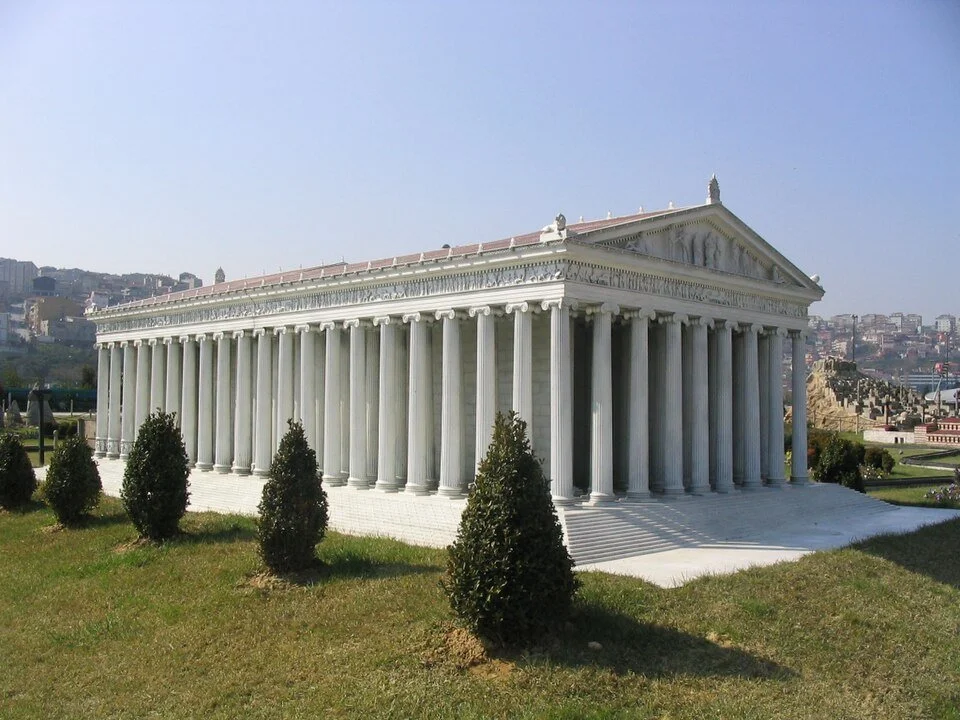
The Temple of Artemis was listed among the Seven Wonders of the Ancient World. Ancient historians like Pliny the Elder and Antipater of Sidon praised its breathtaking scale and beauty. The temple measured roughly 350 feet by 180 feet (larger than a modern football field) with 127 columns rising over 60 feet high.
Archaeological insight: Excavations by the Austrian Archaeological Institute have uncovered architectural fragments, column drums, and sculptural remains that confirm its grandeur. Even in ruins, its physical footprint remains striking.
2. A Center of Worship and Pilgrimage
Artemis of Ephesus was distinct from the Greek Artemis of the hunt. The Ephesian Artemis was an ancient mother goddess associated with fertility, protection, and prosperity. Pilgrims traveled from across the Mediterranean to seek healing, blessings for childbirth, agricultural success, and protection from spiritual harm.
The Spiritual Atmosphere: The temple served as a sanctuary where people dedicated offerings, fulfilled vows, and participated in elaborate civic and religious rites.
A World Wonder
Boasting 127 soaring columns, it was larger than a modern football field and served as a crown jewel of ancient engineering.
Financial Engine
Functioning simultaneously as a pilgrimage hub, silversmith marketplace, and regional banking treasury.
Civic Pride & Identity
Ephesus proudly styled itself the official "temple-keeper" of Artemis, tying civic loyalty directly to pagan worship.
3. The Economic Engine of Ephesus
The temple was not only a religious structure but also an economic powerhouse. Artisans crafted silver shrines, figurines, and ritual objects sold to visiting pilgrims. Acts 19 references this industry directly through Demetrius the silversmith, who feared that the Christian message threatened their livelihood. Furthermore, the temple functioned as a major treasury and bank for wealthy individuals and cities across Asia Minor.
4. Political Prestige and Civic Identity
Artemis was deeply woven into the civic identity of Ephesus. The city proudly bore the title neōkoros—the "temple-keeper" of Artemis—which served as a source of immense political prestige. Festivals, processions, and public ceremonies continuously honored the goddess.
The Gospel Clash: Paul’s message proclaiming Christ as the sole Lord and Savior directly challenged the deepest civic loyalties of the city, sparking the intense public uproar recorded in Acts 19 (explored further in Unity in Christ).
5. Ritual Practices and Sacred Space
The temple grounds included expansive altars, courtyards, sacred groves, and storerooms for offerings. Archaeologists have uncovered votive offerings and inscriptions related to healing and fertility. These practices contributed directly to the dark, fear-driven spiritual atmosphere later addressed in 8 Ways Ancient Magic Shaped Ephesians.
6. Artemis and Spiritual Power
Artemis was believed to control spiritual forces and protect her worshipers from hostile entities. Her iconic multi-breasted image reflected her role as the universal guardian of life, sustenance, and prosperity.
The Gospel Counter: In this environment, Paul’s teaching in Ephesians about Christ’s supreme authority “far above every rule and authority, power and dominion” (Ephesians 1:20–21) spoke directly against the fears and hopes tied to Artemis devotion.
The Clash in Acts 19
The riot in Acts 19 reveals the true depth of Artemis’s influence. When Paul’s gospel preaching gained traction, local artisans feared economic ruin, and the crowd filled the massive theater shouting, “Great is Artemis of the Ephesians!” for two hours. This reaction underscores how tightly economic stability, civic pride, and religious devotion were bound together.
The Temple’s Decline and Legacy
Over time, earthquakes, barbarian invasions, and the rise of Christianity contributed to the temple’s gradual decline. By the fifth century, it had fallen completely into ruin. Excavations beginning in the 19th century eventually revealed its foundations and unearthed priceless artifacts. Today, only a single lonely, reconstructed column stands at the site in Selçuk, Turkey—a quiet testament that human empires fade while the gospel endures.
Frequently Asked Questions
Was Artemis worship the dominant religion in Ephesus? Yes. Artemis was central to Ephesus’s civic identity, economy, and public life.
Why did Paul’s message create tension with Artemis worship? Because absolute allegiance to Jesus Christ directly challenged the city’s economic system, religious traditions, and political pride.
Are there archaeological remains of the temple today? Yes—foundations, column fragments, sculptural pieces, and a single reconstructed column at the site in Turkey.
How does understanding the temple help us read Ephesians? It clarifies the intense spiritual environment behind Paul’s emphasis on Christ’s power, church unity, and the call to turn from former ways.
Works Consulted
Austrian Archaeological Institute. The Excavations at Ephesus.
Scherrer, Peter. “The City of Ephesus: From the Roman Period to Late Antiquity.” In Ephesus: The New Guide, Selçuk: Ephesus Foundation, 2000.
Foss, Clive. Ephesus After Antiquity. Cambridge: Cambridge University Press, 1979.
Arnold, Clinton E. Ephesians: Power and Magic. Cambridge University Press, 1989.
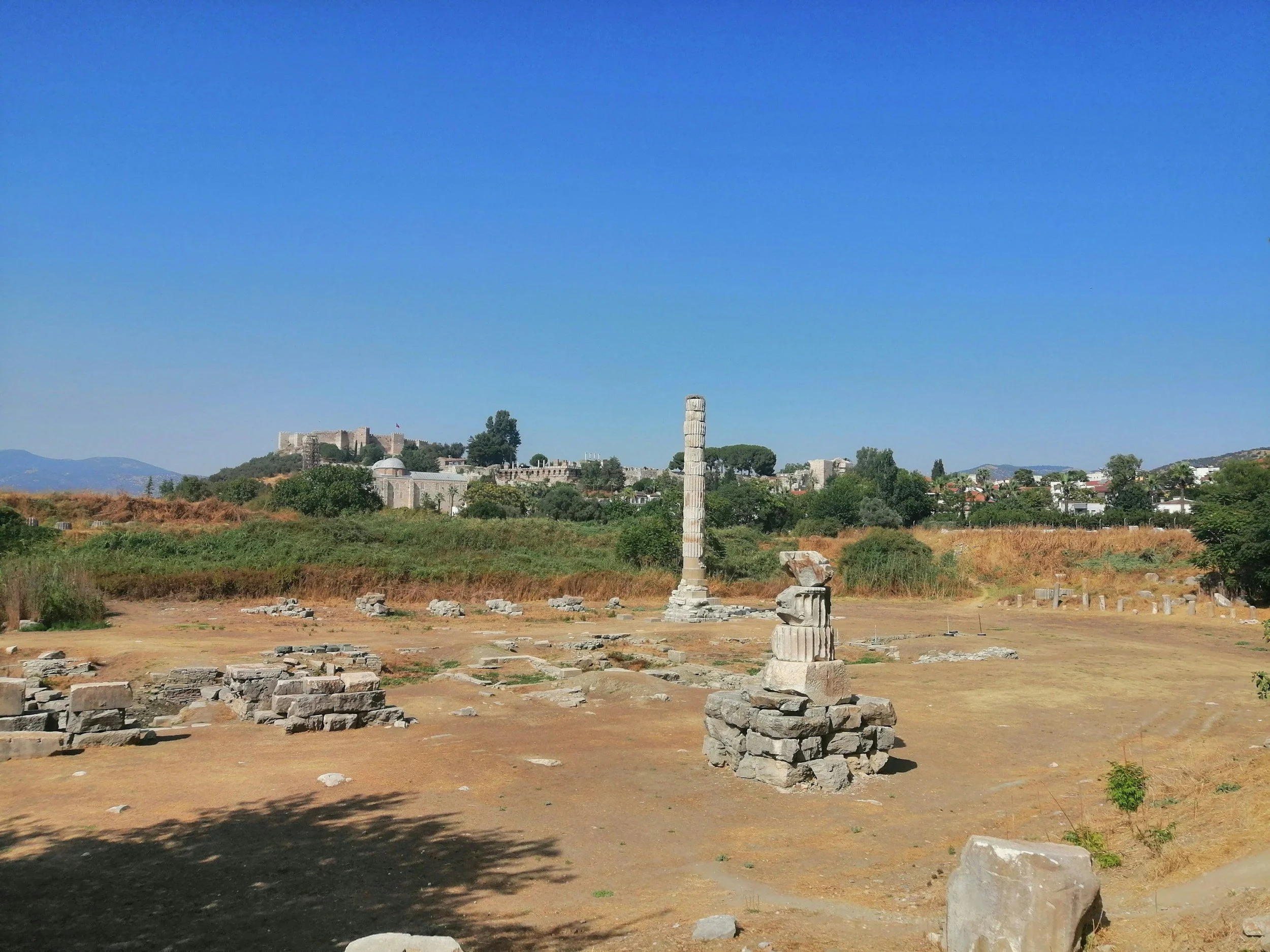
Today, one column remains. The gospel prevails.
Part of Bible Reference / Book Studies
Explore the Letter to the Ephesians
View the main overview or explore chapter-by-chapter summaries.
