The Fourth Gospel
John's Gospel stands apart from the Synoptic Gospels: Matthew, Mark, and Luke. There are fewer parables and far more extended teaching from Jesus himself, and where the other Gospels record dozens of miracles, John narrows the list to seven signs, each one chosen to point toward who Jesus is. Here Jesus names himself directly: the bread of life, the light of the world, the resurrection. Light and dark, sight and blindness, and other threads of symbolism run through nearly every chapter. Explore the grouped articles below, or jump to the chapter-by-chapter verse studies linked from this page.
Start here
Structure and Outline of John
A map of the whole book before you dive into any one chapter: the Prologue, the Book of Signs, the Book of Glory, and the Epilogue, and how they fit together.
Read the overviewBackground & Themes
21 articles
Who wrote it, when, for whom, and the ideas that run underneath every chapter: light and darkness, glory, the Logos, eternal life, and how John's telling compares to Matthew, Mark, and Luke.
- Who Wrote the Gospel of John
- When Was the Gospel of John Written
- Who Was the Gospel of John Written For?
- The Purpose of John's Gospel (John 20:30-31)
- Why the Gospel of John Is Called the Spiritual Gospel
- What Makes John Different
- Gospel of John vs. Synoptic Gospels: A Comparison
- Structure and Outline of John
- Themes in the Gospel of John
- High Christology in the Gospel of John
- Dualism in the Gospel of John: Light vs. Darkness, Truth vs. Lies
- Symbolism in the Gospel of John: Light, Water, Bread, and Vine
- Eternal Life in the Gospel of John
- Jesus as the Logos: Meaning of “In the Beginning Was the Word”
- The Holy Spirit in the Gospel of John: The Paraclete Passages
- The Johannine Community: What Do We Know?
- The Pattern of Discipleship in the Gospel of John
- Historical Context of the Gospel of John (1st Century Judaism & Rome)
- Famous Verses in the Gospel of John (Beyond John 3:16)
- How Many Times Did Jesus Predict His Death?
- The Three Times Jesus Wept and What We Can Learn From It
The 7 Signs
8 articles
John doesn't call them miracles. He calls them signs, deliberately chosen and arranged to point past the act itself to who Jesus is.
- The 7 Signs of Jesus in the Gospel of John
- Sign 1: Water Into Wine at Cana (John 2:1-11)
- Sign 2: Healing the Official's Son (John 4:46-54)
- Sign 3: Healing at the Pool of Bethesda (John 5)
- Sign 4: Feeding the Five Thousand (John 6:1-15)
- Sign 5: Walking on Water (John 6:16-21)
- Sign 6: Healing the Man Born Blind (John 9:1-23)
- Sign 7: Raising Lazarus From the Dead (John 11:38-44)
Only in John
Nine things this Gospel does that the other three don't.
No parables
John never uses the word. Jesus speaks in extended discourse and vivid images instead: vines, gates, shepherds, bread.
No exorcisms
Seven signs, and not one of them is a demon cast out, a scene that appears again and again in Matthew, Mark, and Luke.
The shortest verse in the Bible
"Jesus wept" (John 11:35) is two words in most English translations, sitting at the emotional center of the Lazarus story.
No bread and cup
John gives five chapters to the night before the cross but never narrates the bread and wine. He tells the foot washing instead, a scene the other Gospels leave out.
The longest unbroken teaching in any Gospel
The Farewell Discourse, John 14 through 17, is four straight chapters of Jesus speaking almost without interruption.
"I Am" echoes the burning bush
Each "I am" saying reaches back to Exodus 3:14, where God tells Moses his name is "I AM." John's first readers would have caught it immediately.
The author never gives his name
He calls himself "the disciple whom Jesus loved," a title that has shaped nearly two thousand years of guesswork about who wrote this Gospel.
Mary is never named
Jesus' mother appears at Cana and at the cross, and John calls her only "the mother of Jesus," or simply "Woman."
The eagle
Early tradition paired each Gospel with one of the four living creatures from Ezekiel and Revelation. John got the eagle, the one that flies highest.
The 7 "I Am" Sayings
8 articles
Seven times John records Jesus naming himself directly, each one a claim the Gospel spends its surrounding chapters unpacking.
Character Studies
15 articles
John's Gospel is full of individual encounters. Grouped below by their part in the story, from the first disciples to the people who buried Jesus.
Disciples & Seekers
- N Nathanael in the Bible: Under the Fig Tree in John 1
- A Andrew in the Bible: Following Jesus in the Gospel of John
- P Philip in the Bible: Come and See in the Gospel of John
- T Thomas in the Bible: Doubt and Belief in the Gospel of John
- N Nicodemus in the Bible: His Story in the Gospel of John
- U Understanding Nicodemus: A Study of John 3
- N Nicodemus and the Woman at the Well: A Comparison
- T The Beloved Disciple in the Bible: Witness in the Gospel of John
The Bethany Family & Women Witnesses
- M Martha in the Bible: Faith and Confession in John 11
- L Lazarus in the Bible: Raised from the Dead in John 11
- M Mary of Bethany in the Bible: Anointing Jesus in John 12
- M Mary Magdalene in the Bible: First Witness of the Resurrection in John 20
Opposition & the Passion Narrative
No articles matched your search. Try a different word, or browse by section above.
Stay in the Word
A few times each month I send out a newsletter that contains reflections on Scripture, theology, and provides Bible study resources. Want to receive that?
Read John Chapter by Chapter
Every passage in the Gospel of John, organized chapter by chapter with a summary for each and a link to the full commentary on every section, verse, and story.
Browse the full outline
No Longer Servants But Friends (John 15:15)
In John 15:15, Jesus calls his disciples friends instead of servants. Discover what it means to share intimacy with Christ, live in his love, and join his mission.

Love One Another as I Have Loved You (John 15:12)
John 15:12 records Jesus’ command to “love one another as I have loved you.” Discover what this means for Christian community, discipleship, and witness today.

Apart from Me You Can Do Nothing (John 15:6)
Explore John 15:6 "Apart from me you can do nothing" and discover what Jesus meant about total dependence on God. Learn how this teaching transforms our understanding of spiritual fruitfulness, self-reliance, and abiding in Christ.

I am the True Vine in John 15:1
Discover the meaning of John 15:1 where Jesus declares "I am the true vine." Explore the rich symbolism, theological significance, and practical implications of Christ as the source of spiritual life and fruitfulness.

The Vine and the Branches (John 15:1-17)
Explore John 15:1–17, where Jesus calls himself the true vine and commands his disciples to abide in him. Learn what it means to bear lasting fruit and love one another.

The Advocate Will Teach You All Things (John 14:25-31)
John 14:25–31 – Jesus promises the Spirit will teach and remind, gives his peace, and assures victory over the powers of darkness. Hope for troubled hearts.

Jesus Predicts Peter’s Denial in John 13:31-38
In John 13:31–38, Jesus speaks of glory through the cross, gives a new commandment to love one another, and predicts Peter’s denial — a call to grace and faith.
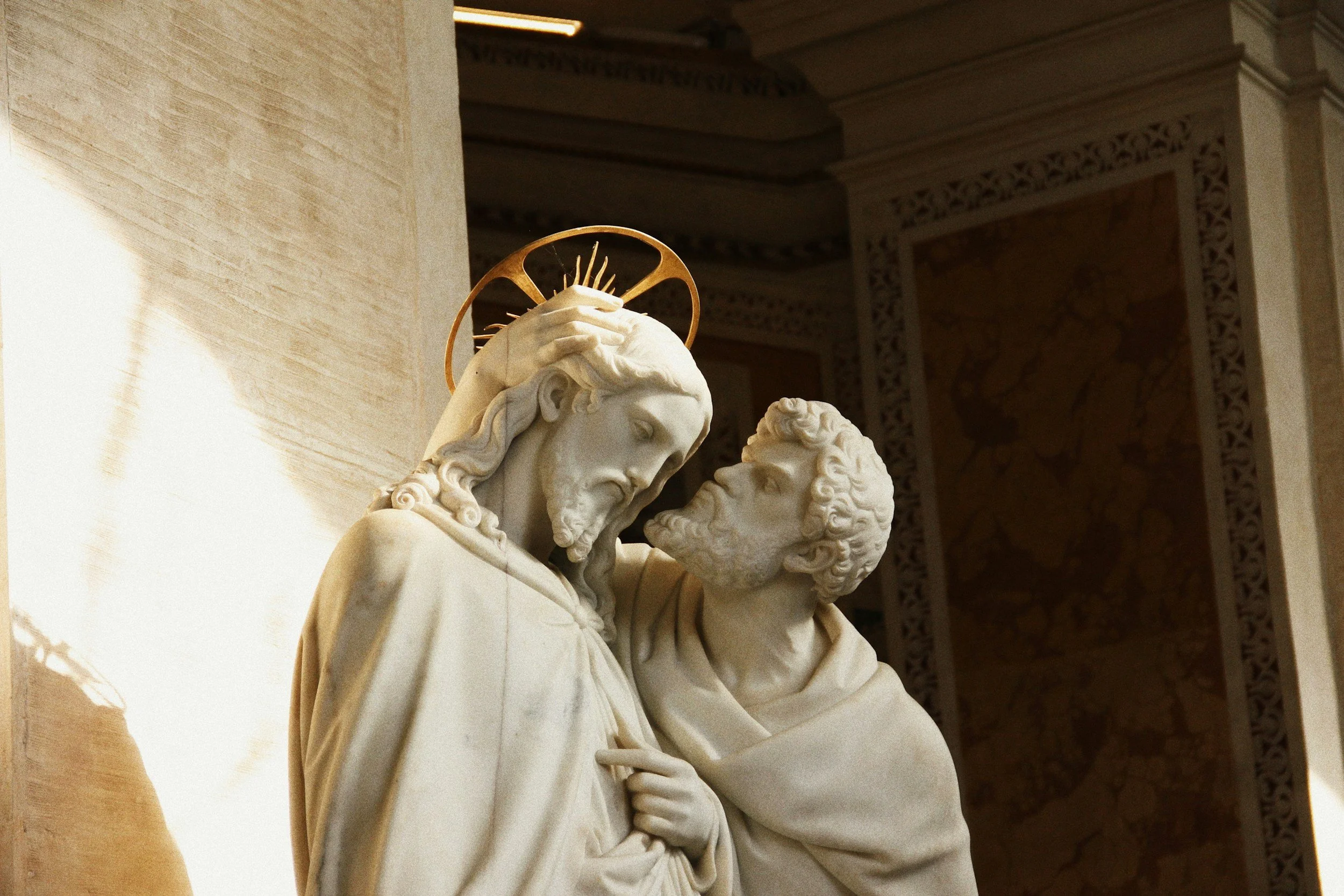
Jesus Predicts His Betrayal (John 13:18-30)
Explore John 13:18–30, where Jesus predicts his betrayal. Discover its meaning, theology, and how Judas’ night departure reveals Christ’s sovereign love.

Another Advocate: Jesus Promises the Spirit in John 14:16
John 14:16 – Jesus promises “another Advocate,” the Holy Spirit, who will be with believers forever. The Spirit comforts, teaches, and empowers the Church in Christ’s mission.

If You Love Me, Keep My Commandments (John 14:15)
John 14:15 – “If you love me, keep my commandments.” Jesus links true love with obedience, showing that discipleship is proven in action and Spirit-filled faithfulness.

Promise of the Holy Spirit (John 14:15-24)
In John 14:15–24, Jesus promises the Holy Spirit, teaching that love and obedience open the way for God’s presence to dwell within believers as their eternal Advocate.

John 13:1 - Jesus Loved Them to the End
Explore the meaning of John 13:1 – “Having loved his own who were in the world, he loved them to the end.” Discover how this verse anchors the Upper Room story and speaks to the depth of Christ’s unfailing love today.

John 13:1-17 – Jesus Washes the Disciples’ Feet
In John 13:1–17, Jesus washes His disciples’ feet, revealing servant leadership, humility, and divine love. Explore its meaning for today’s faith and church life.

Whatever You Ask in My Name (John 14:13-14)
John 14:13–14 promises Jesus will act when we pray in his name. These verses teach us that true prayer aligns with Christ’s will, trusts God’s glory, and believes he hears—even when the answer is no or wait.

Do Not Let Your Hearts Be Troubled in John 14:1
John 14:1 teaches peace through faith: Jesus commands troubled disciples to trust in God and in him, showing that real calm comes from belief in Christ’s presence.
Jesus the Way to the Father (John 14:1-14)
In John 13:31–38, Jesus reveals his glory through the cross, commands his disciples to love one another, and foretells Peter’s denial, showing that true discipleship rests on Christ’s grace.

John 12:46 – Jesus the Light of the World
Explore John 12:46, where Jesus declares He came as light into the world. Learn how this promise of light over darkness shapes faith, discipleship, and hope.

John 12:37–50 – Belief and Unbelief Among the People
Explore John 12:37–50, where many reject Jesus despite His signs. Learn why unbelief persists, how Scripture explains hardened hearts, and what true faith means.

How Many Times Did Jesus Predict His Death?
How many times did Jesus predict his death? Explore the three Synoptic predictions, John’s “lifting up” sayings, and their meaning for discipleship today.

John 12:32 – When I Am Lifted Up, I Will Draw All People
John 12:32 says, “When I am lifted up, I will draw all people to myself.” Discover its Old Testament roots, universal scope, and meaning for discipleship today.