Bible Reference > Bible Facts > Geography and Places > The Mount of Olives in the Bible
By Rev. Jason Elder · Updated November 23, 2026
Introduction
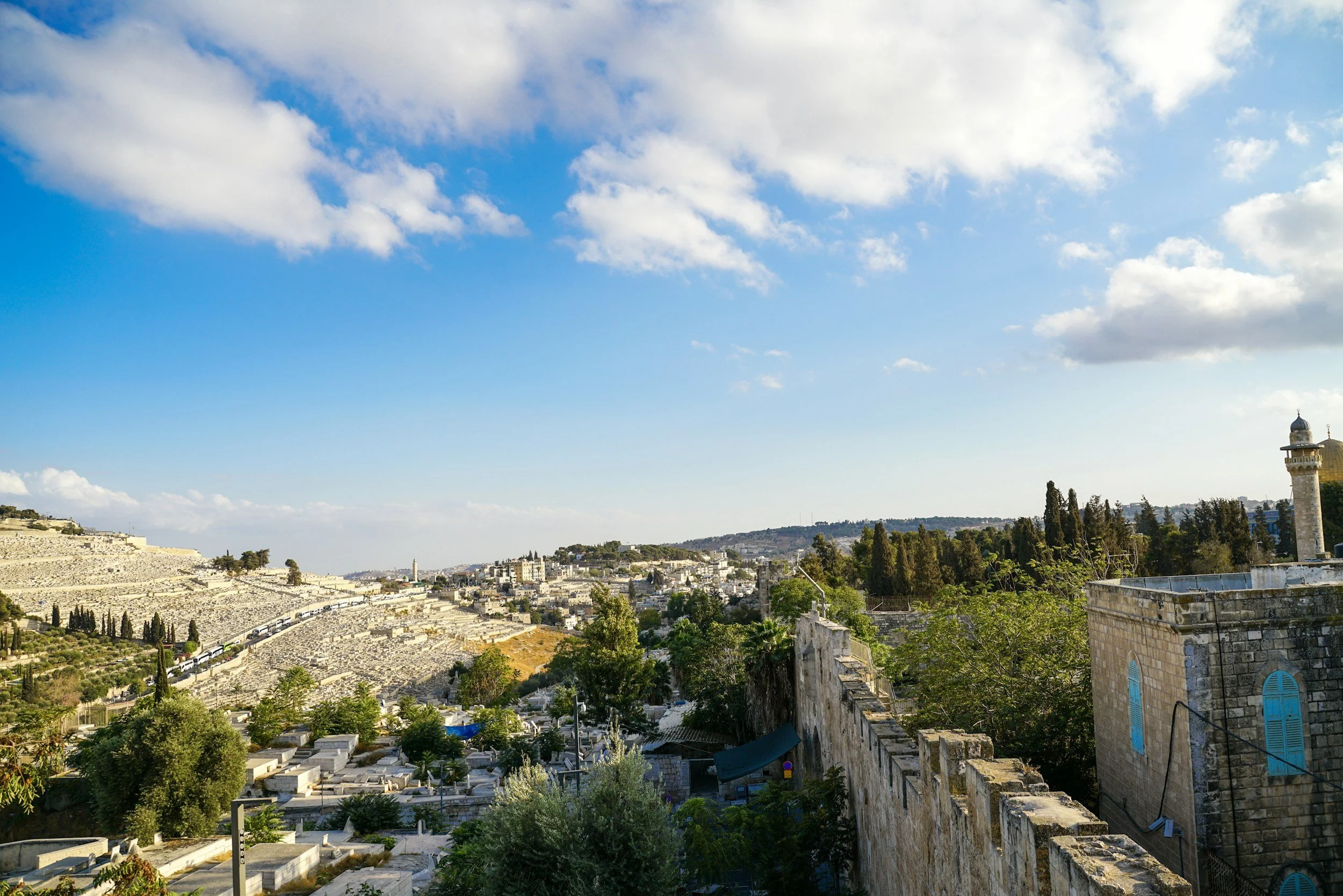
Stand anywhere in the Old City of Jerusalem and look east, and you will see a long, rounded ridge rising just across the Kidron Valley, its slopes covered with ancient tombs, church domes, and the gray-green of olive trees. It is the Mount of Olives, and few places on earth have seen more of the Bible's story.
King David climbed it weeping. The prophet Ezekiel saw the glory of God pause on it. Zechariah saw the Lord's feet standing on it at the end of days. Jesus rode down it on Palm Sunday, wept over Jerusalem from its slope, taught his disciples about the end of the age on it, prayed in agony at its foot, and, according to Luke, ascended to heaven from it.
This page explains where the Mount of Olives is, why it is called that, every major event that happened there in the Bible, what Zechariah's prophecy about it splitting in two means, and what visitors find there today.
The Mount of Olives at a Glance
| Location | A ridge directly east of Jerusalem's Old City, across the Kidron Valley |
|---|---|
| Height | About 2,700 feet (around 820 meters) above sea level |
| Distance from the temple | "A sabbath day's journey" (Acts 1:12), a little over half a mile |
| Also called | Mount Olivet (KJV); Jebel et-Tur (Arabic) |
| Named for | The olive groves that covered its slopes |
| Villages | Bethphage and Bethany on the eastern slope |
| At its foot | The Garden of Gethsemane |
| Old Testament | 2 Samuel 15:30; 1 Kings 11:7; Ezekiel 11:23; Zechariah 14:4 |
| New Testament | Triumphal entry, Jesus weeps, Olivet Discourse, Gethsemane, the Ascension |
Where Is the Mount of Olives?
The Mount of Olives is a ridge immediately east of Jerusalem's Old City, separated from the Temple Mount by the Kidron Valley. It runs roughly north to south for about two miles and has several summits. Its highest point stands about 2,700 feet (around 820 meters) above sea level, a little higher than the Temple Mount across the valley, which is why it offers the classic panoramic view of Jerusalem.
In Jesus' day, the walk from the temple to the top of the Mount of Olives was short. Acts calls it "a sabbath day's journey" (Acts 1:12), the distance a person could walk on the Sabbath under Jewish custom, a little over half a mile. The villages of Bethphage and Bethany lay on its eastern slopes, on the road to Jericho (Luke 19:29). The Garden of Gethsemane sat near its foot, just across the Kidron from the city.
Why Is It Called the Mount of Olives?
The name is simple: the hill was covered with olive groves. Olives were one of the great crops of the land, and olive oil was used for food, lamps, medicine, and anointing kings and priests. The name Gethsemane, the garden at the foot of the mountain, likely means "oil press," a place where olives were crushed for their oil.
The King James Version sometimes calls it "mount Olivet" (2 Samuel 15:30; Acts 1:12), from the Latin word for an olive grove. That is where Jesus' teaching there gets its name, the Olivet Discourse. Today it is sometimes called by its Arabic name, Jebel et-Tur.
The Mount of Olives in the Old Testament
The name "Mount of Olives" appears only twice in the Old Testament, but the ridge east of Jerusalem shows up several more times.
David Flees Across the Mount of Olives (2 Samuel 15:30)
The first time the Bible names the Mount of Olives, it is a place of grief. When David's son Absalom rebelled and seized Jerusalem, the old king fled the city on foot. "But David went up the ascent of the Mount of Olives, weeping as he went, with his head covered and walking barefoot" (2 Samuel 15:30). Worse, David learned on the way that his trusted counselor Ahithophel had joined the conspiracy (15:31).
A thousand years later, the Son of David would walk up the same slope on the night he was betrayed by one of his closest friends.
Solomon's High Places (1 Kings 11:7)
In his old age, Solomon built shrines to foreign gods "on the mountain east of Jerusalem" (1 Kings 11:7). Centuries later, King Josiah tore them down, and the southern end of the ridge became known by a grim name, "the Mount of Destruction" (2 Kings 23:13). The hill that would see Jesus pray had once seen Israel's kings wander far from God.
The Glory of the Lord Pauses on the Mountain (Ezekiel 11:23)
In one of the saddest visions in Scripture, the prophet Ezekiel watches the glory of God leave the temple before Babylon destroys it. The glory rises from the sanctuary, moves to the east gate, and then "stopped on the mountain east of the city" (Ezekiel 11:23), as if lingering before departing. Later Ezekiel sees the glory return "from the east" (Ezekiel 43:2).
The Lord Stands on the Mount of Olives (Zechariah 14:4)
The second time the Old Testament names the mountain, it is a place of hope. Zechariah sees a vision of the final day, when the nations gather against Jerusalem and the Lord comes to fight for his people: "On that day his feet shall stand on the Mount of Olives, which lies before Jerusalem on the east; and the Mount of Olives shall be split in two from east to west by a very wide valley" (Zechariah 14:4). We will look at that prophecy more closely below.
Jesus on the Mount of Olives
Almost every major event of Jesus' final week happens on or near the Mount of Olives.
| When | What Happened | Scripture |
|---|---|---|
| Palm Sunday | Jesus rides down the slope into Jerusalem | Luke 19:29–40 |
| Palm Sunday | Jesus weeps over the city | Luke 19:41–44 |
| Holy Week nights | Jesus lodges on the mount or in Bethany | Luke 21:37; Mark 11:11 |
| Tuesday or Wednesday | The Olivet Discourse | Matthew 24:3; Mark 13:3 |
| Thursday night | Jesus prays in Gethsemane | Luke 22:39–46 |
| Thursday night | Judas betrays Jesus; the arrest | Luke 22:47–53 |
| Forty days after Easter | The Ascension | Luke 24:50–51; Acts 1:9–12 |
Bethany: Jesus' Home Base
Bethany, on the eastern slope, was the home of Mary, Martha, and Lazarus (John 11:1). During his last week, Jesus went out to Bethany or the Mount of Olives each night and came back into the city each morning (Mark 11:11; Luke 21:37).
The Triumphal Entry
Palm Sunday began on the Mount of Olives. Jesus sent two disciples to find a colt in a village there, then rode down toward the city. "As he was now approaching the path down from the Mount of Olives, the whole multitude of the disciples began to praise God joyfully with a loud voice" (Luke 19:37). See The Triumphal Entry (Luke 19:28–40).
Jesus Weeps over Jerusalem
From the slope of the Mount of Olives, with the whole city in view, Jesus stopped and wept: "If you, even you, had only recognized on this day the things that make for peace!" (Luke 19:41–42). A small church called Dominus Flevit ("the Lord wept") marks the traditional spot today. See Jesus Weeps Over Jerusalem (Luke 19:41–44).
The Olivet Discourse
Later that week, sitting on the Mount of Olives "opposite the temple" (Mark 13:3), Jesus told his disciples that the temple would be destroyed and taught them about the end of the age (Matthew 24–25; Mark 13; Luke 21). See The Olivet Discourse and Signs of the End Times (Luke 21:5–38).
Gethsemane: Prayer and Arrest
After the Last Supper, "when they had sung the hymn, they went out to the Mount of Olives" (Mark 14:26). At a place called Gethsemane, Jesus prayed, "not my will but yours be done," while his disciples slept (Luke 22:39–46). There Judas arrived with the crowd and betrayed him with a kiss (Luke 22:47–48). See Jesus Prays on the Mount of Olives (Luke 22:39–46), What Is the Garden of Gethsemane?, and Jesus' Arrest and Judas' Betrayal (Luke 22:47–53).
The Ascension
Forty days after the resurrection, Jesus led his disciples "out as far as Bethany," blessed them, and was carried up into heaven (Luke 24:50–51). Acts adds that the disciples then "returned to Jerusalem from the mount called Olivet, which is near Jerusalem, a sabbath day's journey away" (Acts 1:12). As they stood watching, two men in white told them, "This Jesus, who has been taken up from you into heaven, will come in the same way as you saw him go into heaven" (Acts 1:11).
The mountain where Jesus wept, taught, prayed, and was betrayed is also the place from which he returned to the Father.
The Mount of Olives Split in Two (Zechariah 14:4)
On that day his feet shall stand on the Mount of Olives, which lies before Jerusalem on the east; and the Mount of Olives shall be split in two from east to west by a very wide valley; so that one half of the Mount shall withdraw northward, and the other half southward. (Zechariah 14:4)
Zechariah 14 describes "a day... coming for the LORD" (14:1) when the nations gather against Jerusalem and God himself comes to defend his people. The Lord's feet touch the Mount of Olives, the mountain splits, and a great valley opens through which the people escape, "as you fled from the earthquake in the days of King Uzziah" (14:5; compare Amos 1:1). The chapter ends with living waters flowing out from Jerusalem and the Lord becoming "king over all the earth" (14:8–9).
How Christians Interpret Zechariah 14:4
A literal future event. Many Christians, especially in dispensational and futurist traditions, expect a literal fulfillment: Christ will return bodily to the Mount of Olives, the mountain will split, and he will establish his reign in Jerusalem. They often connect Zechariah 14:4 with the angels' promise in Acts 1:11 that Jesus "will come in the same way as you saw him go into heaven." See What Is Dispensationalism? and What Is the Millennium?
Prophetic and apocalyptic imagery. Many other interpreters read the passage as prophetic poetry, the kind of cosmic language the prophets used to describe God's decisive intervention. Mountains melt, valleys open, and creation itself responds when God comes to save. On this reading, the point is not geology but hope: God will come, God will make a way where there is none, and God's reign will fill the earth. See What Is the Day of the Lord? and What Is Apocalyptic Literature?
Both readings agree on the heart of the prophecy: the God who seemed absent will come, and his coming will mean rescue for his people.
Has the Mount of Olives Split?
No. The Mount of Olives has not split, and the event Zechariah describes has not happened.
Is There a Fault Line Under the Mount of Olives?
You will find many claims online that a geological fault line runs through the Mount of Olives and that an earthquake could split it exactly as Zechariah describes. The wider region is seismically active. The great fault system called the Dead Sea Transform runs through the Jordan Valley to the east, and Jerusalem has been shaken by significant earthquakes throughout its history, including the one in Uzziah's day that Zechariah and Amos remember. But specific claims about a fault ready to split the Mount of Olives in two should be treated with caution. The prophecy's meaning does not rest on geology, and it does not need a seismograph to be true.
Will Jesus Return to the Mount of Olives?
The New Testament promises that Jesus will return. Acts 1:11 says he "will come in the same way as you saw him go into heaven," and he ascended from the Mount of Olives. Christians who read Zechariah 14:4 literally believe he will return to that very place. Others believe the emphasis in Acts is on the manner of his coming, visibly and gloriously, rather than on the exact location. What all Christians confess is the promise itself: he will come again. See Bible Verses About the Second Coming.
The Mount of Olives Today
Visitors to Jerusalem today usually begin at the top of the Mount of Olives for the famous view of the Old City and the Dome of the Rock, then walk down the steep road Jesus rode on Palm Sunday. Along the way are several sites that commemorate the Gospel stories.
The Jewish Cemetery. The western slope is covered with what is often described as the oldest continuously used Jewish cemetery in the world, with burials going back about three thousand years and graves numbering in the tens of thousands. Many Jews chose to be buried here because of the hope, drawn from Zechariah 14 and other prophecies, that the resurrection of the dead would begin on this mountain.
The Chapel of the Ascension. A small shrine near the summit marks the traditional place where Jesus ascended to heaven.
The Church of the Pater Noster. Built over a cave where tradition says Jesus taught his disciples, it displays the Lord's Prayer on tiles in well over a hundred languages.
Dominus Flevit. This small church, shaped like a teardrop, marks the place where Jesus wept over Jerusalem (Luke 19:41).
The Church of Mary Magdalene. A Russian Orthodox church with golden onion domes, one of the most recognizable landmarks on the hillside.
The Garden of Gethsemane and the Church of All Nations. At the foot of the mountain, a small garden of very old olive trees sits beside the Church of All Nations, also called the Basilica of the Agony, built over a rock where tradition says Jesus prayed.
Frequently Asked Questions About the Mount of Olives
Where is the Mount of Olives in the Bible?
The Mount of Olives is named in 2 Samuel 15:30 and Zechariah 14:4 in the Old Testament, and many times in the New Testament, including Matthew 21:1; 24:3; 26:30; Mark 11:1; 13:3; 14:26; Luke 19:29, 37; 21:37; 22:39; John 8:1; and Acts 1:12.
What happened on the Mount of Olives?
David fled over it in grief (2 Samuel 15:30). Jesus began his triumphal entry there (Luke 19:29–37), wept over Jerusalem from its slope (19:41), taught the Olivet Discourse on it (Matthew 24:3), prayed and was arrested at Gethsemane at its foot (Luke 22:39–53), and ascended to heaven from it (Acts 1:9–12).
How far is the Mount of Olives from Jerusalem?
It is directly across the Kidron Valley from the Old City, less than a mile from the Temple Mount. Acts 1:12 calls the distance "a sabbath day's journey," a little over half a mile.
Is the Garden of Gethsemane on the Mount of Olives?
Yes. Gethsemane was at the foot of the Mount of Olives, on its western side facing the city. Luke simply calls the place the Mount of Olives (22:39), while Matthew and Mark name it Gethsemane.
Is the Mount of Olives the same as Mount Zion?
No. Mount Zion is on the western side of the Kidron Valley, in or beside the city of Jerusalem itself. The Mount of Olives is the separate ridge to the east, across the valley. See 6 Mountains in the Bible.
How high is the Mount of Olives?
Its highest point is about 2,700 feet (around 820 meters) above sea level, slightly higher than the Temple Mount across the valley.
What does the Mount of Olives represent in the Bible?
It is a place of both grief and hope. David wept there, Jesus wept and prayed there, and Judas betrayed him there. But it is also where Zechariah saw the Lord coming to save, where Jesus ascended to heaven, and where Christians have long looked for his return.
Related Reading
Scripture quotations are from the New Revised Standard Version Bible, copyright © 1989 the National Council of the Churches of Christ in the United States of America. Used by permission. All rights reserved worldwide. KJV quotations are from the King James Version, which is in the public domain.
Works Consulted
Freedman, David Noel, ed. The Anchor Bible Dictionary. 6 vols. New York: Doubleday, 1992. S.v. "Olives, Mount of."
Murphy-O'Connor, Jerome. The Holy Land: An Oxford Archaeological Guide. 5th ed. Oxford: Oxford University Press, 2008.
Petersen, David L. Zechariah 9–14 and Malachi. Old Testament Library. Louisville: Westminster John Knox Press, 1995.
Rainey, Anson F., and R. Steven Notley. The Sacred Bridge: Carta's Atlas of the Biblical World. Jerusalem: Carta, 2006.