The Golden Lampstand (Menorah): design and symbolism
Quick Summary
The golden lampstand described in Exodus was more than a sacred furnishing. Hammered from pure gold, shaped like a blossoming tree, and tended daily by the priests, the menorah reminded Israel that God’s presence brings light, order, and life. Its design echoed creation, its symbolism shaped worship, and its steady flame called the people to live as those who walk in God’s light.
Introduction
The menorah stands among the most recognizable images from Israel’s early worship. It appears in the instructions for the tabernacle, standing in the Holy Place where the priests ministered. Its lamps gave steady light, its branches carried blossoms, and its presence helped center Israel’s story in the God who creates, renews, and sustains.
The instructions in Exodus are purposeful. They do not aim at artistic flourish alone but at theology expressed through craftsmanship. The menorah held beauty, meaning, and memory. It shaped the spiritual imagination of Israel, carried forward into the temple period, echoed in prophetic visions, and remembered long after the temple fell. Exploring its design and symbolism reveals how worship rested on a deep sense of God’s nearness.
How the Menorah Was Designed
The description in Exodus 25:31–40 presents the menorah as a single, unified work. It was hammered from pure gold rather than cast or assembled from parts. This method required skill, patience, and precision. A central shaft supported three branches on each side, for a total of seven lamps.
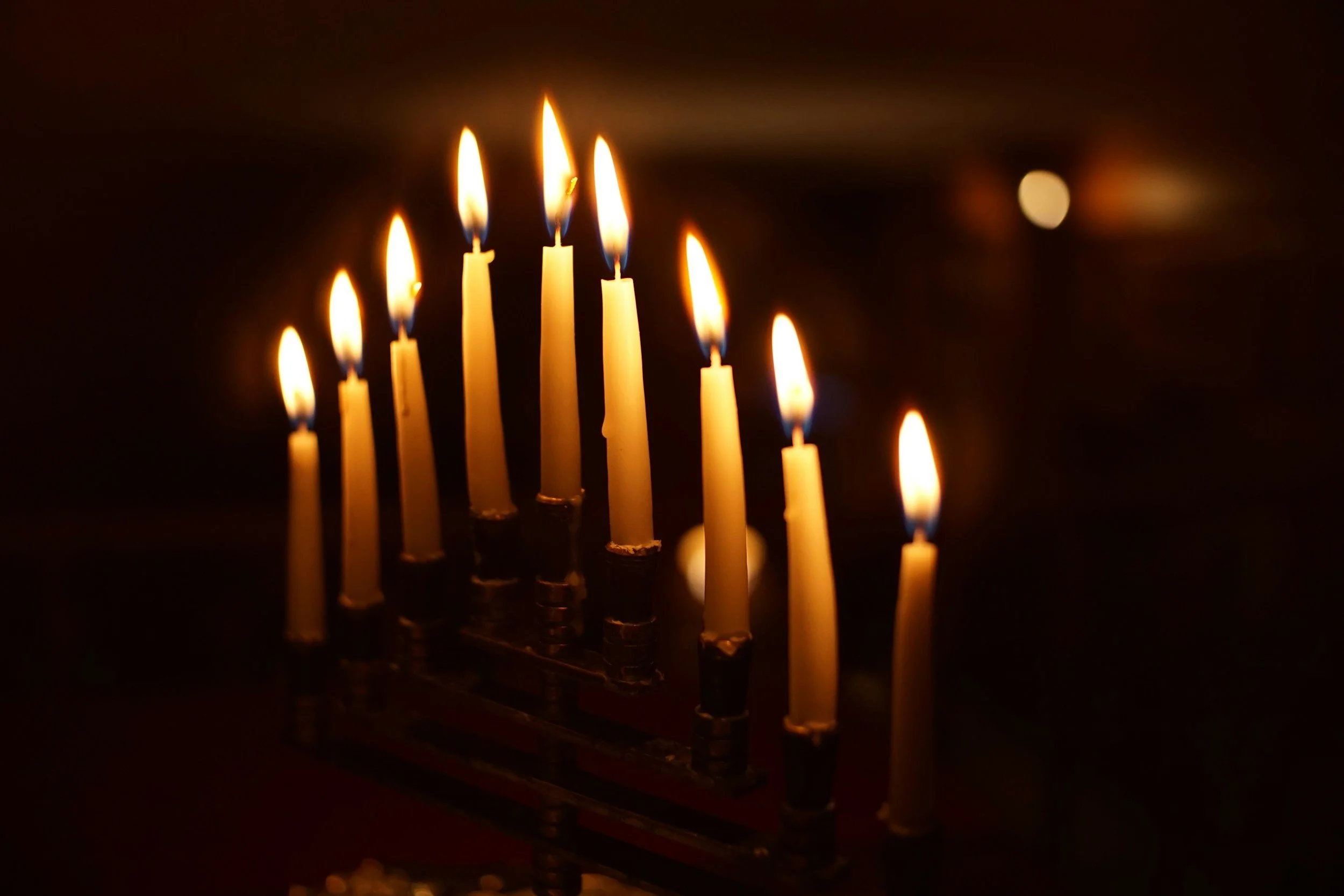
A menorah holds candles and provides light. Imagine the light reflecting on the gold overlays inside the worship space!
The branches and shaft were decorated with almond-blossom cups, buds, and flowers. These floral shapes were not decoration for its own sake. They linked the menorah to the natural world, suggesting that worship grows from creation rather than from human invention.
The menorah’s seven lamps were arranged to provide steady, even illumination for the Holy Place. When the priests tended the lamps at evening and morning, their work kept the light constant. The light was not a flicker but a settled presence.
The instructions close with a reminder that the menorah must match the pattern shown to Moses on the mountain. This reinforces that the menorah is not a human design but a response to divine instruction.
Light for the Holy Place
Inside the Holy Place, the menorah stood opposite the table of the bread of the Presence. The two objects together created a space shaped by nourishment and light. The menorah’s lamps illuminated the priestly tasks and symbolized the clarity of God’s guidance.
Scripture often uses light to speak of God’s character—truth, wisdom, and presence. In the menorah’s glow, these ideas became tangible. The priests performed their work within a space defined by this sacred light, and the people were invited to see their own lives through the same lens.
The continual tending of the lamps also reflected Israel’s vocation. Just as the light was not to go out, the people were called to remain faithful. The menorah gave shape to a daily rhythm of devotion.
The Almond Blossom and Its Meaning
The almond tree blooms early in the year, often before other plants show signs of life. Its blossoms signal the certainty of renewal. When the menorah carried almond-shaped cups, buds, and flowers, it placed this theme within Israel’s worship.
Jeremiah 1:11–12 uses the almond branch to speak of watchfulness and fulfillment—God watching over the word to perform it. The menorah’s blossoms carried a similar message. They reminded Israel that God’s work continues even when circumstances seem uncertain.
The floral design also echoes the imagery of Eden. The menorah stands as a crafted reminder that God’s world is good and that worship aligns the people with this goodness.
The Menorah as a Symbol of Calling
The significance of the menorah extends beyond the tabernacle. In Zechariah 4, the prophet sees a golden lampstand flanked by olive trees. The message that follows—“Not by might, nor by power, but by my Spirit”—uses the lampstand as an image of God’s empowering presence.
The menorah becomes a sign of calling. It points to Israel’s role as a light to the nations. Later Jewish tradition adopts the menorah as a central symbol, appearing on coins, seals, and later art. It becomes a visual statement of identity—a people shaped by the God who brings light.
The Menorah in Temple Worship
Solomon’s Temple expanded the number of lampstands, placing ten—five on each side of the Holy Place (1 Kings 7:49). These additional lampstands increased the radiance of the space and underscored the gift of light within worship.
Herod’s Temple returned to a single central menorah, described by Jewish historians such as Josephus. This menorah became a symbol of Jewish resilience. When the Romans captured Jerusalem in 70 CE, they carried the menorah to Rome, an event depicted on the Arch of Titus. Even in captivity, the menorah’s image endured and eventually returned to become one of the lasting symbols of Jewish faith.
Oil, Flame, and Daily Worship
The lamps of the menorah burned with pure olive oil. The priests were responsible for tending the flames daily—refilling oil, trimming wicks, and ensuring the lamps did not go out.
Oil in Scripture represents consecration and the Spirit. The steady use of oil in the menorah suggests that light is not self-generated. It comes from God’s provision. The menorah’s flame thus becomes a picture of dependence and grace. The people walk in light because God supplies what is needed.
The Menorah’s Legacy in Faith and Culture
The menorah did not disappear when temple worship ceased. It continued to shape the imagination of Israel and later communities of faith. The seven-branched menorah remains one of the most enduring symbols of Jewish identity. It captures the hope that God’s light not only shines but prevails.
In Christian reflection, the menorah often becomes a picture of the church’s calling to bear witness to the light of Christ. This theme echoes throughout the New Testament. The menorah’s enduring presence in Scripture and tradition reveals how objects of worship can become windows into larger truths.
Meaning for Today
Reflecting on the menorah offers more than historical insight. It gives shape to spiritual imagination. The menorah teaches that worship draws from creation, that God’s presence brings clarity, and that faithfulness is sustained by grace rather than effort alone. It encourages communities to seek the light rather than the shadows and to remember that God’s work continues even in uncertain seasons.
The menorah’s steady flame invites a way of life marked by trust, hope, and purpose.
