Measurements and Objects
in the Bible
From cubits to talents, from altars to arks, understand the Bible through its
units, tools, and sacred objects
Bible Unit Converter
Need a quick way to understand biblical measurements in modern terms? Use the Bible Unit Converter below to instantly translate ancient units—like cubits, shekels, ephahs, and more—into feet, liters, pounds, and other familiar values. Perfect for studying scripture, preparing lessons, or just satisfying your curiosity.
Biblical Unit Converter
| Biblical Unit | Description | Imperial (Feet/Inches) | Metric (Meters) |
|---|---|---|---|
| Cubit | Forearm length | ||
| Day's Journey | Distance walked in a day | ||
| Fingerbreadth | Width of a finger | ||
| Furlong | 1/8 of a Roman mile | ||
| Handbreadth | Width of a hand | ||
| Span | Hand span (thumb to little finger) |
| Biblical Unit | Description | US Dollar | Euro | British Pound |
|---|---|---|---|---|
| Assarion | Small Roman coin | |||
| Bekah | About a half a shekel | |||
| Daric | Persian gold coin | |||
| Denarius | Roman silver coin | |||
| Gerah | 1/20 of a shekel | |||
| Lepton/Widow's Mite | Smallest Jewish coin | |||
| Mina | 50 shekels | |||
| Pim | 2/3 of a shekel | |||
| Shekel | Standard unit of weight | |||
| Talent | 60 minas | |||
| Quadrans | Roman bronze coin |
| Biblical Unit | Description | Imperial (Pounds/Ounces) | Metric (Kilograms) |
|---|---|---|---|
| Bekah | Half a shekel | ||
| Gerah | 1/20 of a shekel | ||
| Kesitah | Unit of unknown value | ||
| Mina | 50 shekels | ||
| Pim | 2/3 of a shekel | ||
| Shekel | Standard unit of weight | ||
| Talent | 60 minas |
Explore Measurements and
Objects in the Bible
A clear and engaging guide to the size and layout of the Tabernacle courtyard, explaining its biblical dimensions, purpose, and meaning. Learn how this sacred space shaped Israel’s worship and why it still matters for understanding holiness and community.
A clear and engaging guide to the stone pillars of the Bible, explaining their uses, symbolism, and role as markers of God’s presence, covenant, and memory throughout Israel’s story.
A clear and accessible guide to the Tabernacle’s dimensions, layout, and meaning. This post explores its structure, sacred spaces, and role in Israel’s worship.
A clear and accessible guide to the dimensions and history of Herod’s Temple. Drawing from Scripture, Josephus, and archaeological scholarship, this post explores its structure, courts, and development.
A clear and accessible guide to the dimensions of Herod’s Temple. This post explores the structure, courts, and significance of the Temple expanded by Herod the Great.
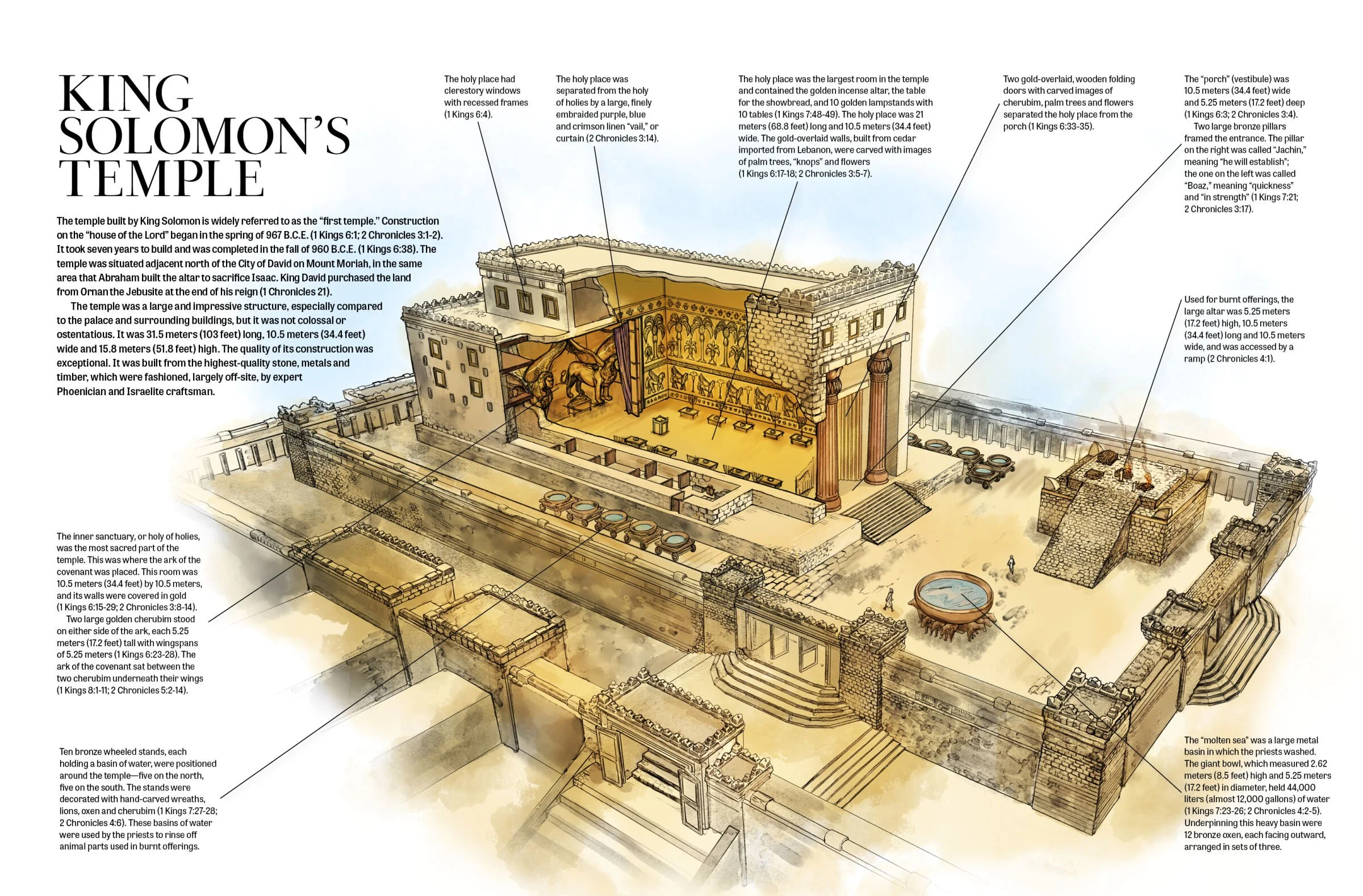
A clear and accessible guide to the dimensions and significance of Solomon’s Temple. This post explores its layout, purpose, and enduring meaning in biblical history.
A clear and accessible guide to the dimensions of Solomon’s Temple. This post explores its structure, layout, and meaning based on biblical descriptions.
A clear, accessible guide to the Bronze Sea in Solomon’s Temple, explaining its biblical dimensions, structure, ritual purpose, and symbolic meaning.
Learn the size, design, and purpose of the Table of Showbread in the Bible. Explore its dimensions, symbolism, and role in Israel’s worship and weekly life.
An in-depth look at the biblical menorah—its design, symbolism, and place in Israel’s worship. This article explores how the golden lampstand expressed creation, calling, and the enduring light of God, offering a clear and insightful guide for readers seeking to understand its meaning.
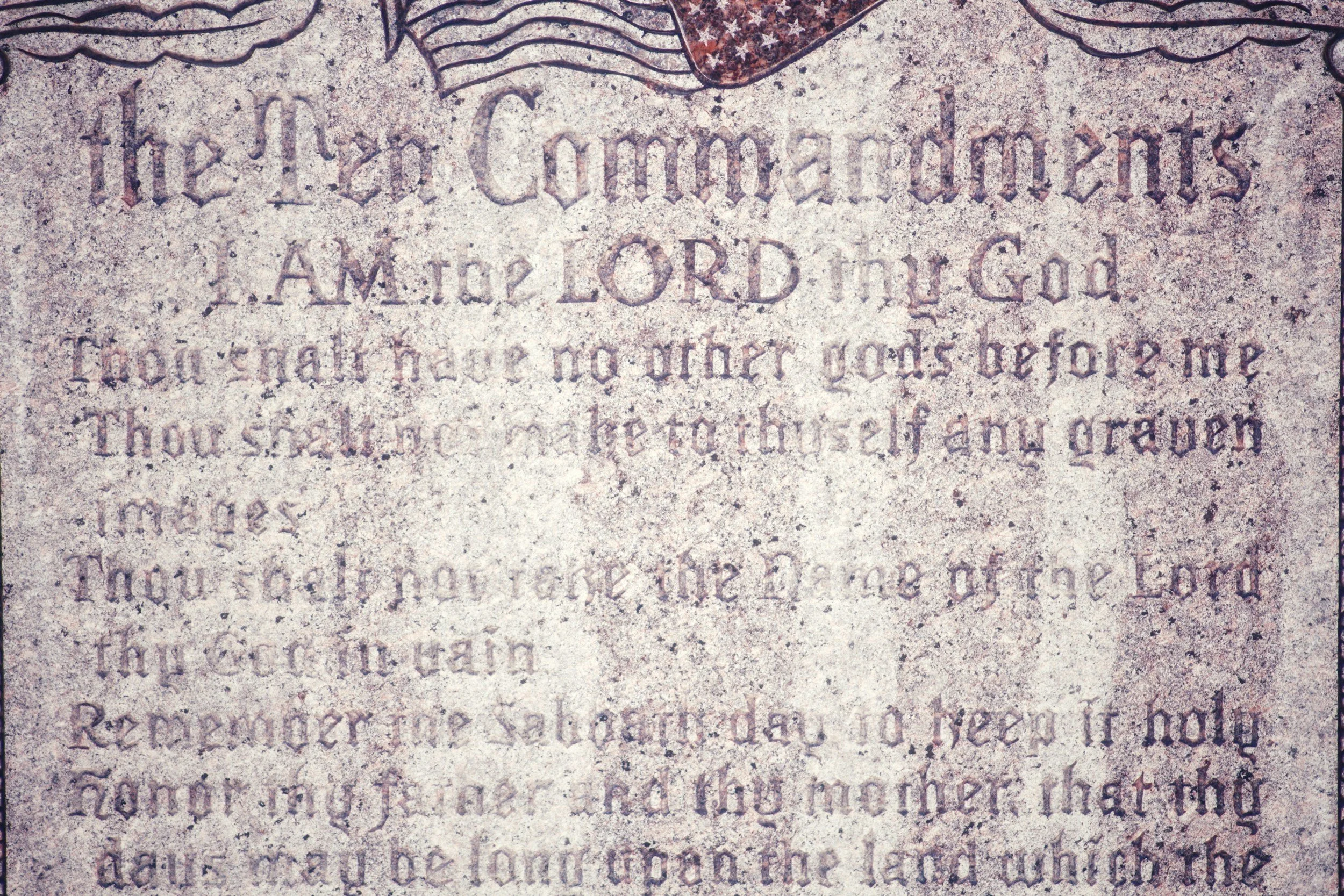
A clear, grounded guide to the Ten Commandments tablets—their size, material, and place in Israel’s story. Drawing on Scripture, archaeology, and ancient covenant practice, this article explores what the tablets were, how they were made, and why they mattered for Israel’s life with God.
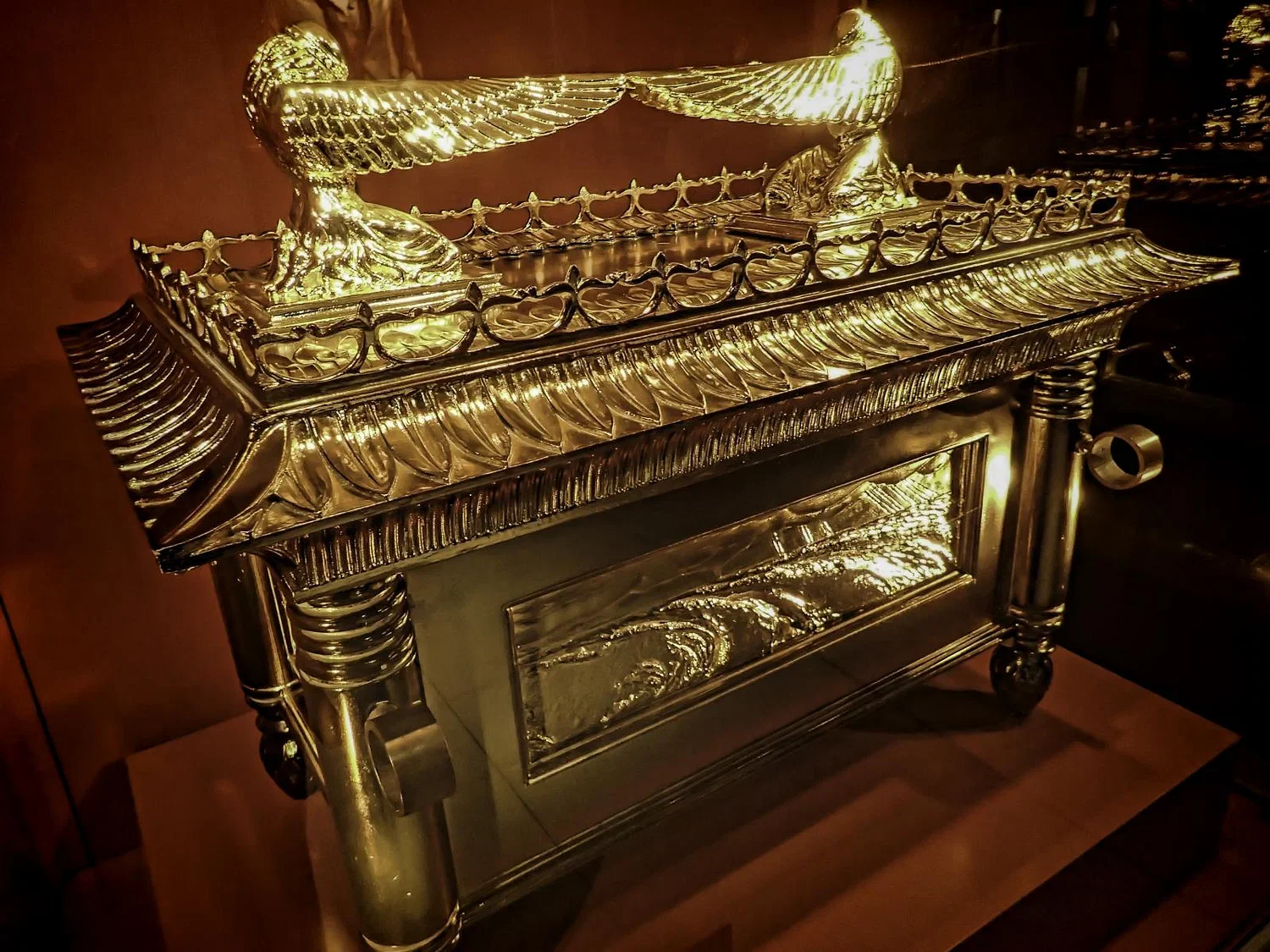
Explore the dimensions, history, symbolism, and mystery of the Ark of the Covenant, including what the Bible says, what archaeologists propose, and why this sacred object still captures the world’s imagination.
Noah’s Ark was built of gopher wood, sealed with pitch, and measured 300 by 50 by 30 cubits. Learn about the Ark’s materials, design details, and how its construction reflects God’s provision and Noah’s obedience in the Genesis flood narrative.
Noah’s Ark measured 300 by 50 by 30 cubits—about 450 feet long, 75 feet wide, and 45 feet high. Learn how big the Ark was, how ancient cubits worked, and what its size reveals about the Genesis flood narrative.
The Bible gives two measurements for Goliath’s height: six cubits and a span (about nine and a half feet) in the Masoretic Text, and four cubits and a span (about six foot seven) in the Dead Sea Scrolls and Septuagint. Learn how ancient measurements shape our understanding of Goliath’s stature.
A biblical shekel weighed about 11 grams, or roughly 0.4 ounces. Learn how the shekel functioned as a unit of weight, its role in trade and worship, and why this small measure mattered so much in the world of Scripture.
A biblical talent weighed between 70 and 90 pounds, making it one of the largest ancient units of weight. Learn how heavy a talent was, why its value mattered, and how this measurement shapes the meaning of key passages such as the Parable of the Talents.
A bushel in the Bible refers to a household measuring basket used for grain, translated from the Greek modios. Learn its approximate size, role in daily life, and meaning in Jesus’ teaching about not hiding a lamp under a bushel.
A quart in the Bible is a modern approximation used in English translations to explain ancient measurements like the omer or the choinix. Learn how it relates to biblical units and why translators use it to clarify Scripture’s everyday quantities.
A biblical pound refers to the Greek mina, a substantial unit of weight and value used in the New Testament. Learn its meaning, worth, and role in Jesus’ Parable of the Ten Pounds and in daily life of the ancient world.
A drachma in the Bible was a Greek silver coin similar in value to a Roman denarius. Learn its meaning, value, and significance in Jesus’ Parable of the Lost Coin and in daily life of the New Testament world.
A denarius in the Bible was a common Roman silver coin and the typical wage for a day’s labor. Learn its meaning, value, and role in Jesus’ teachings and daily life in the New Testament.
A stater in the Bible is a Greek silver coin worth four drachmas. Learn how the stater explains the temple tax story in Matthew 17:24 to 27 and the economic life of the New Testament era.
A beka in the Bible is a small Hebrew weight equal to half a shekel or about five to seven grams. Learn how the beka shaped offerings, fairness, and shared responsibility in ancient Israel.
A mina in the Bible is an ancient weight equal to fifty shekels or about one and a quarter pounds of silver. Learn how the mina shaped offerings, trade, and Jesus’ teaching on stewardship.
A gerah in the Bible is the smallest Hebrew weight equal to one twentieth of a shekel or about half a gram. Learn how the gerah shaped offerings, vows, and economic fairness in ancient Israel.
An omer in the Bible is a Hebrew dry measure equal to one tenth of an ephah, or about two liters. Learn how the omer shaped stories of manna, worship, and first fruits offerings in ancient Israel.
A bath in the Bible was a large Hebrew liquid measure equal to about twenty to twenty five liters or six gallons. Learn how the bath shaped temple worship, offerings, and economic life in ancient Israel.
A hin in the Bible is an ancient Hebrew liquid measure equal to about one gallon. Learn how the hin was used for anointing oil, drink offerings, and worship practices in the Old Testament.
A clear explanation of how tall the Temple was in cubits, what the measurements reveal about Israel’s worship, and why the Temple’s height mattered.