What is an Ephod in the Bible?
Quick Summary
An ephod in the Bible is a sacred garment worn by priests in ancient Israel, especially the high priest. It appears in the instructions for the tabernacle in Exodus and becomes a symbol of worship, intercession, and the presence of God. The ephod also appears in narrative stories, sometimes used faithfully and sometimes misused. Understanding the ephod helps illuminate Israel’s worship, the role of the priesthood, and the theological weight of approaching God.
Introduction
The ephod is one of the most distinctive items in Israel’s worship. It is a sign of calling, holiness, and responsibility. The ephod is tied to the work of the priest: bearing the names of the tribes before God, discerning God’s will, and mediating for the people.
Over time, the ephod becomes a symbol of both devotion and danger. In the hands of faithful priests, the ephod points to God’s presence. In the hands of unfaithful leaders, it becomes an object of misuse and confusion.
Scholars such as Jacob Milgrom, Carol Meyers, and Gordon Wenham emphasize that the ephod must be read within the broader system of Israel’s worship. It is part of a complex network of symbols that teach Israel about holiness, justice, and God’s desire to dwell among the people.
The Priestly Ephod in Exodus
The clearest description of the ephod appears in Exodus 28. God gives Moses detailed instructions for constructing garments for Aaron and his sons.
Materials and Design
The ephod is made of gold, blue, purple, and crimson yarns, and fine linen (Exodus 28:6). These colors echo the tabernacle curtains and signal holiness.
Two shoulder pieces hold the ephod together. On these are two onyx stones engraved with the names of the twelve tribes (Exodus 28:9 to 12). The high priest literally carries the people before God.
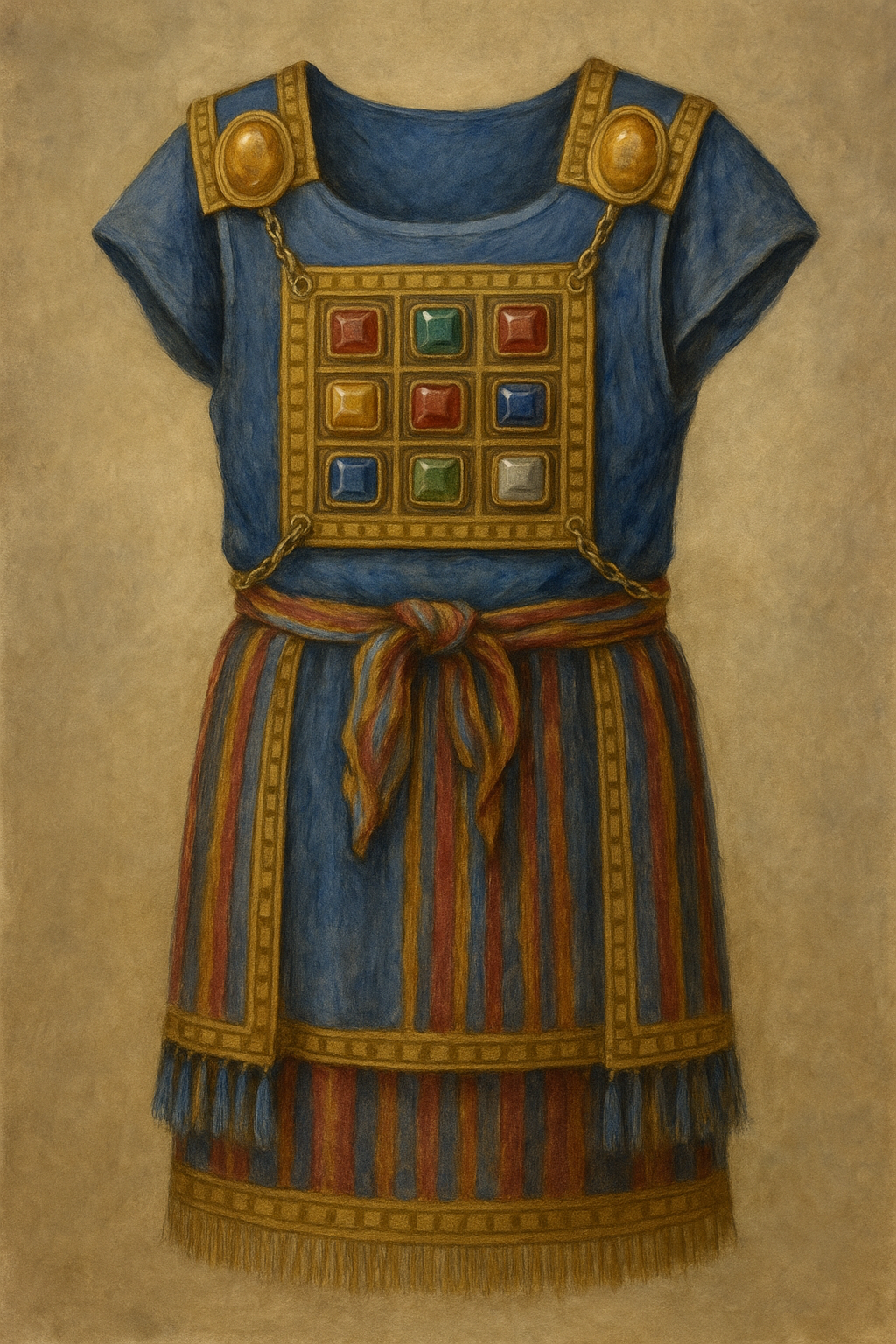
This is the priest’s ephod with a blue garment with gold trim and twelve colorful stones.
The Breastpiece of Judgment
Attached to the ephod is the breastpiece, set with twelve precious stones engraved with the names of the tribes (Exodus 28:15 to 21). Inside the breastpiece are the Urim and Thummim, objects used for discerning God’s will (Exodus 28:30).
The ephod, together with the breastpiece, forms the center of the high priest’s work of intercession.
Jacob Milgrom notes that the ephod’s design symbolizes representation, mediation, and the weight of priestly responsibility.
A Garment for Holy Service
The ephod sets the high priest apart for sacred duties. Everything about it points to God’s presence, the holiness of the sanctuary, and the calling of the priest to serve with reverence.
The Ephod in the Historical Books
Beyond the tabernacle, the ephod appears in narrative stories where its role becomes more complex.
Gideon’s Ephod (Judges 8)
After his victory over Midian, Gideon makes an ephod from gold (Judges 8:27). This ephod becomes a snare for Israel. People begin to treat it as an object of worship.
This story shows that even sacred symbols can become distorted when separated from God’s command.
The Ephod in Priesthood Stories
In 1 Samuel, the ephod is associated with priests who seek God’s will.
Samuel ministers before the Lord wearing a linen ephod (1 Samuel 2:18).
Ahijah the priest uses an ephod to inquire of God (1 Samuel 14:3).
David seeks guidance from God through the priest with an ephod (1 Samuel 23:9; 30:7).
These episodes reveal how the ephod functions in moments of decision. It symbolizes the desire to hear God’s voice and act faithfully.
Carol Meyers emphasizes that narrative uses of the ephod reflect its dual role as a garment and a tool for discernment.
Misuse in Micah’s Shrine (Judges 17 to 18)
Micah creates an ephod as part of a personal shrine, leading to idolatry and confusion. This misuse underscores that the ephod is not inherently holy. Its meaning depends on obedience to God.
Theological Meaning of the Ephod
The ephod carries several layers of theological significance.
Representation
The high priest carries the names of the tribes on the ephod. This symbolizes that the priest stands before God on behalf of the people.
Holiness
The ephod’s materials and colors reflect the beauty and holiness of God’s presence.
Discernment
With the breastpiece, the ephod is tied to seeking God’s will. It embodies the belief that God guides the community.
Mediation
The ephod points to the priestly role of standing between God and the people in prayer, sacrifice, and intercession.
Warning
Stories of misuse remind the community that sacred things require faithfulness. When symbols are detached from obedience, they can become dangerous.
Gordon Wenham notes that the ephod teaches worshippers to approach God with humility and discernment.
The Ephod and the New Testament
While the New Testament does not describe an ephod, its themes appear throughout the ministry of Jesus.
Jesus as High Priest
Hebrews describes Jesus as the great high priest who enters the heavenly sanctuary (Hebrews 4:14; 9:11 to 12). He carries the people before God not with stones or garments but with his own life.
Discernment Through the Spirit
Instead of the Urim and Thummim, believers receive the Holy Spirit who guides, teaches, and intercedes.
Representation and Intercession
Jesus continues the priestly work signified by the ephod. He intercedes for believers and bears them on his heart (Hebrews 7:25).
The ephod becomes a shadow of the greater reality fulfilled in Christ.
How the Ephod Shapes Faith Today
The ephod’s meaning continues to speak to the church.
Worship
The ephod reminds believers that worship is about approaching God’s presence with reverence and joy.
Community
The priest carries the names of the tribes. This image encourages believers to carry one another in prayer.
Guidance
Just as the priest sought God’s will with the ephod, believers seek guidance through Scripture, prayer, and the Spirit.
Faithfulness
Stories of misuse warn against treating sacred things casually or turning symbols into idols.
Hope
The ephod points toward Jesus, who continues to represent believers before God.
FAQ
Was the ephod only for the high priest?
The ornate ephod was for the high priest. Other priests wore simpler linen ephods.
What were the Urim and Thummim?
Objects used for discerning God’s will, kept in the breastpiece attached to the ephod.
Did Gideon’s ephod break the law?
Yes. Gideon’s ephod was not commanded by God and led to idolatry.
Does the ephod still exist today?
No. It was part of the tabernacle and temple system.
