Who Was Lancelot Andrewes?
Quick Summary
Lancelot Andrewes (1555–1626) was one of the greatest preachers and theologians of the English Church. A scholar, bishop, and translator of the King James Bible, he combined profound intellect with humble piety. His Nativity Sermon of 1622, preached before King James I, remains one of the finest examples of classical Anglican preaching—learned, poetic, and centered on the wonder of the Incarnation.
Early Life and Education
Born in London in 1555, Andrewes studied at Pembroke Hall, Cambridge, where his command of languages and theology quickly distinguished him. He was fluent in Greek, Latin, and Hebrew, and by the end of his life, could reportedly read fifteen languages. His early academic career focused on Scripture, prayer, and the discipline of study as devotion. Even as a young scholar, Andrewes blended scholarship with spiritual depth, showing that holiness and intellect could dwell together.
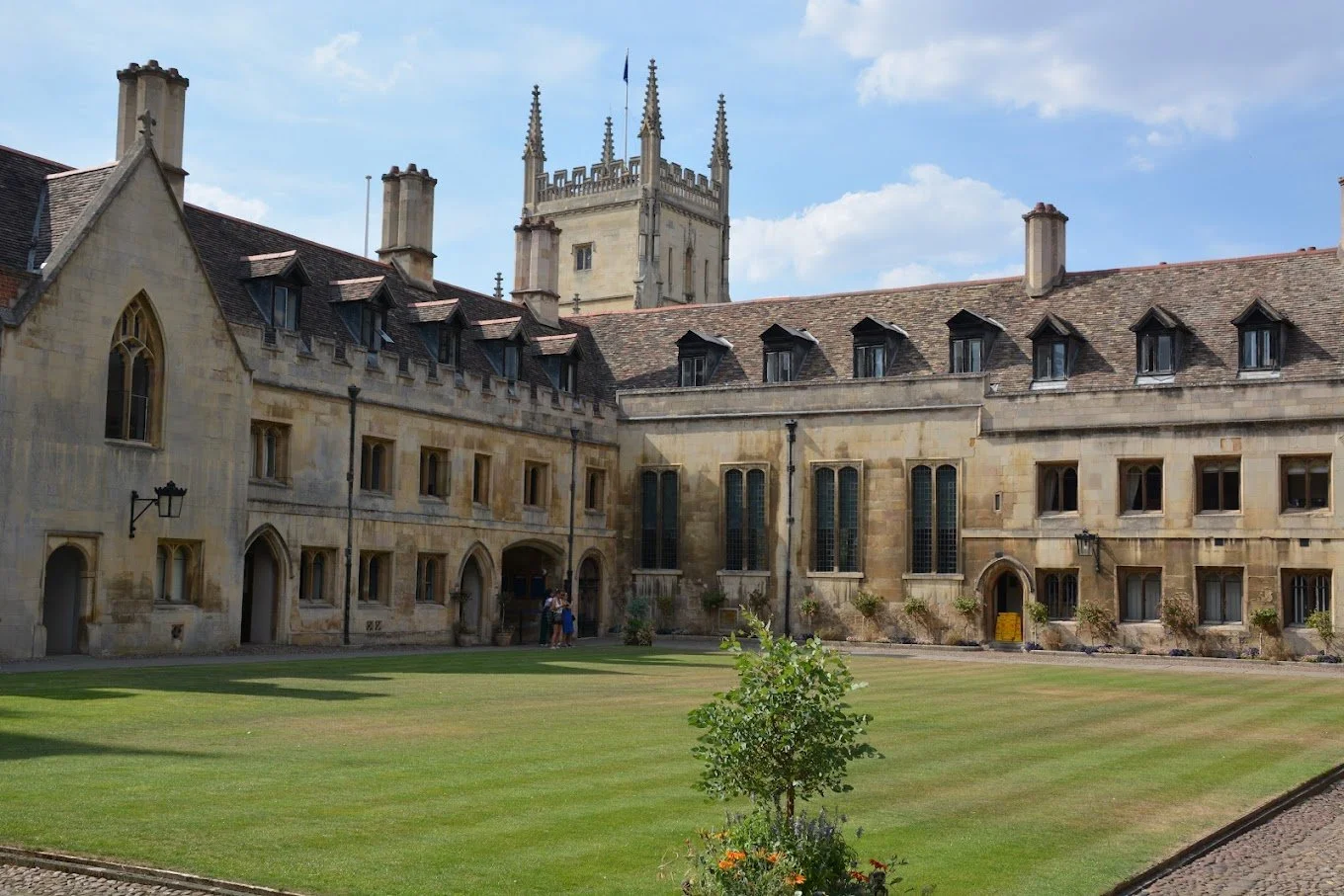
Pembroke Hall, Cambridge University—the college where Lancelot Andrewes studied theology and languages before becoming one of England’s greatest preachers.
Bishop and Scholar
Andrewes served successively as Bishop of Chichester, Ely, and Winchester. His influence reached far beyond the pulpit. As a principal translator for the King James Version of the Bible, he worked on the early books of the Old Testament, helping to shape one of the most enduring literary achievements in the English language.
His sermons—especially those for Advent, Christmas, and Easter—were widely read in his lifetime and after. Andrewes was known for his precision with language, his ability to weave Scripture with prayer, and his meditative pacing. Every sentence carries the weight of reflection. To read Andrewes is to hear theology sung rather than argued.
Preacher to Kings
Andrewes served as royal chaplain to both Elizabeth I and James I. Preaching before royalty required courage and grace, and Andrewes offered both. His sermons at Whitehall were not flattery but proclamation. He reminded kings that Christ’s birth humbled all earthly power. His Nativity Sermon of 1622, delivered before King James, is a masterwork of balance—profoundly reverent yet pastorally direct.
T. S. Eliot later wrote that Andrewes was “the first great preacher of the English Catholic Church,” admiring his capacity to fuse intellect with devotion. Eliot’s own spiritual essays bear traces of Andrewes’ cadence and precision. For Andrewes, words were instruments of worship.
Influence and Legacy
Lancelot Andrewes helped shape Anglican spirituality at a crucial moment in history. His writings on prayer influenced the Book of Common Prayer, and his sermons remain models of theological depth expressed with beauty. He emphasized the Incarnation—the mystery of God with us—as the center of Christian life.
His famous prayer from his Private Devotions captures his spirit: “Thou who hast made me, pity me; Thou who hast redeemed me, save me; Thou who hast sanctified me, perfect me.” That prayerful humility guided every aspect of his ministry.
Today, Andrewes is remembered not only for his intellect but for his reverence. His sermons, including the Nativity Sermon of 1622, continue to draw readers into the mystery of the Word made flesh—a message as needed now as it was four centuries ago.
Related Sermons on This Site
FAQ
What was Lancelot Andrewes known for?
He was a bishop, scholar, and preacher renowned for his eloquent sermons and for helping translate the King James Bible.
Why is his Nativity Sermon significant?
It represents the finest example of 17th-century English preaching, uniting scholarship, reverence, and deep joy in the mystery of the Incarnation.
How did he influence later writers?
T. S. Eliot and generations of Anglican theologians drew from Andrewes’ meditative, scriptural style.
What characterized his preaching?
A balance of intellect and devotion, careful attention to Scripture, and the conviction that theology must lead to worship.
Closing Note
This biographical post accompanies the 1622 Nativity Sermon and its reflection, both part of the Historic Sermons collection.
For more classic sermons from the Church’s history, explore the full archive.
