Where is the Jordan River?
Quick Summary
The Jordan River is a significant waterway in the Middle East, flowing from the Sea of Galilee in northern Israel down to the Dead Sea, forming a natural boundary between modern-day Israel, the West Bank, and Jordan. It is approximately 156 miles (251 km) long and holds immense spiritual, historical, and geopolitical importance. Many key biblical events—including the baptism of Jesus—took place in or near the Jordan River.
Introduction
The Jordan River winds its way through some of the most sacred and contested terrain in the world. It is more than just a river—it is a spiritual landmark, a border, a site of miracles and transitions. From the Israelites crossing into the Promised Land to Jesus' baptism by John, the Jordan flows through the pages of Scripture like a thread of renewal.
But where is it now? What does it look like today? And why does it still matter?
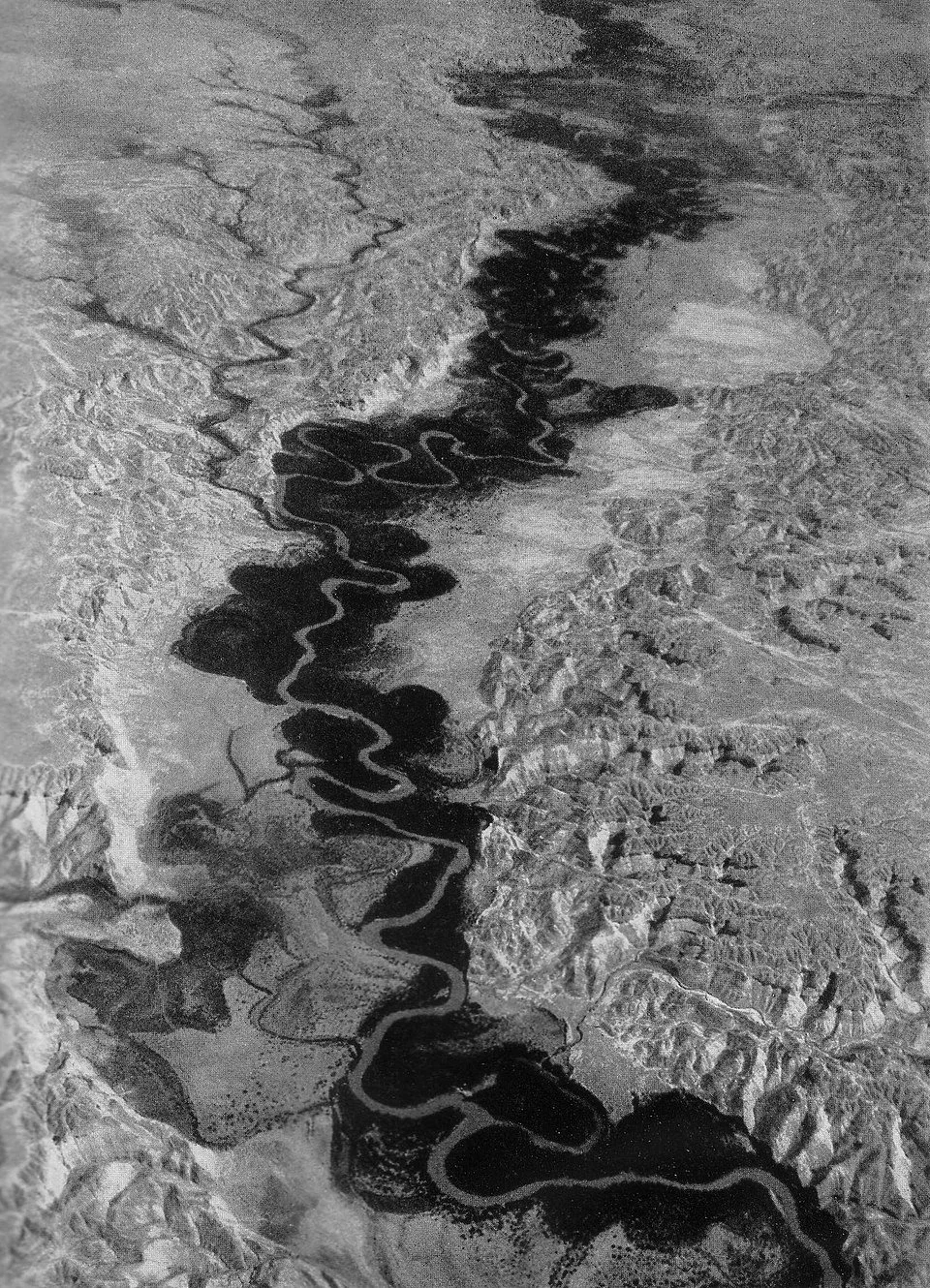
Aerial photo, 1939. Source.
Where Is the Jordan River Located?
The Jordan River is located in the Middle East and forms a rough boundary between the following:
To the west: Israel and the West Bank
To the east: The Hashemite Kingdom of Jordan
Key Geographic Points:
Source: The river begins at the confluence of three tributaries—Hasbani (Lebanon), Banias (Syria), and Dan (Israel).
Flows through: The Sea of Galilee (also called Lake Kinneret)
Ends at: The Dead Sea, the lowest point on earth
The river forms part of the Jordan Rift Valley, a geological depression that is part of the larger Great Rift Valley system.
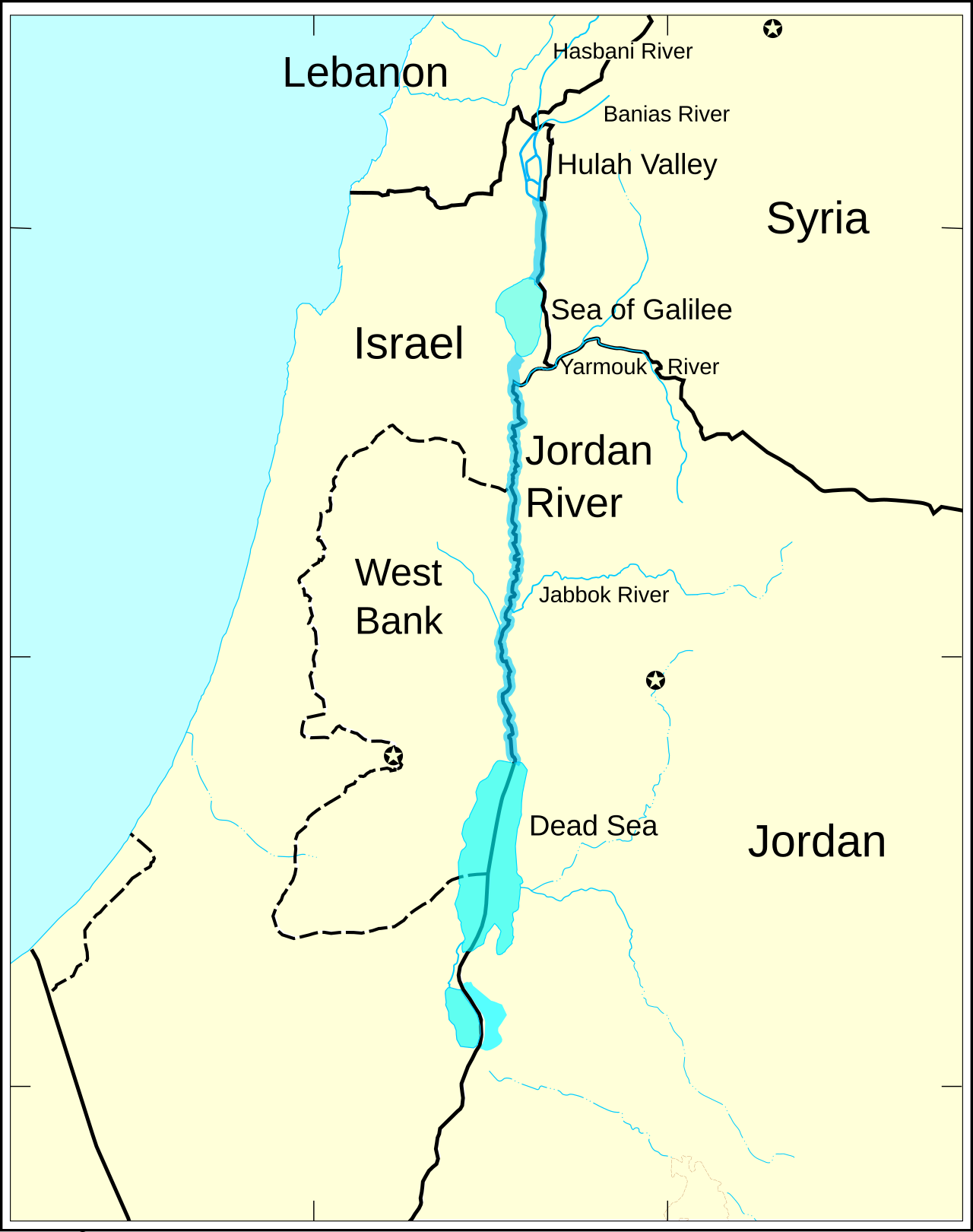
Source. Map showing the Jordan River’s path from the Sea of Galilee to the Dead Sea, highlighting its role as a boundary between modern-day Israel, the West Bank, and Jordan.
Major Biblical Events at the Jordan River
1. Crossing into the Promised Land
Joshua 3–4: The Israelites cross the Jordan River as the waters part, just like the Red Sea.
2. Baptism of Jesus
Matthew 3:13–17: Jesus is baptized by John the Baptist in the Jordan River.
3. Elijah and Elisha
2 Kings 2:6–14: Elijah parts the Jordan before being taken up to heaven; Elisha crosses back alone.
4. Naaman’s Healing
2 Kings 5: The Syrian commander Naaman is healed of leprosy after washing seven times in the Jordan.
The Jordan is not just a place of crossing—it is a place of transformation.
What Does the Jordan River Look Like Today?
The modern Jordan River is much smaller than it once was. Due to water diversion projects, irrigation, and climate change, its flow has significantly decreased. In some places, it resembles a stream more than a river.
Still, the Jordan remains a vital resource and a powerful religious symbol. Pilgrims visit its banks, especially near the traditional baptism site known as Qasr al-Yahud, just north of the Dead Sea.
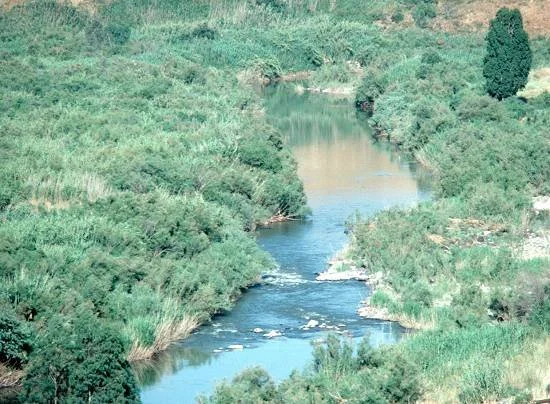
The riverbed offers respite for lush vegetation. Source.
Key Sites to Visit Today:
Qasr al-Yahud (West Bank): Traditional site of Jesus’ baptism
Yardenit (near Sea of Galilee): A popular baptism site in Israel
Jordan River Valley: A fertile area with agricultural significance
Political and Environmental Issues
The Jordan River is not just a spiritual boundary—it is also a political and ecological one:
Water rights are a source of tension between Israel, Jordan, and the Palestinian Authority.
Environmental concerns include pollution and reduced water flow.
Conservation efforts are underway to restore parts of the river’s health.
Symbolism of the Jordan River in Scripture
The Jordan River often symbolizes:
Transition and new beginnings
Divine power and intervention
Repentance and spiritual cleansing
God’s presence at life’s thresholds
Whether it was Israel entering the Promised Land or Jesus beginning his public ministry, the Jordan marked a turning point.
Meaning for Today
The Jordan River calls to mind the sacred crossings in our own lives. It is a reminder that:
God goes before us in transitions.
New life often begins in unexpected places.
Repentance and renewal remain central to faith.
Even if it has shrunk in size, its spiritual power remains expansive.

